For a good while, the two most popular sports in the United States were the National Football League and NASCAR. While NASCAR would never get to the point of eclipsing the popularity of the NFL, the two have experienced a good amount of crossover throughout their history. NASCAR even held a race at Solider Field, home of the Chicago Bears.
There was nowhere this crossover was seen more than team ownership. In the late-90s football legends began owning racing teams, to varying degrees of success.
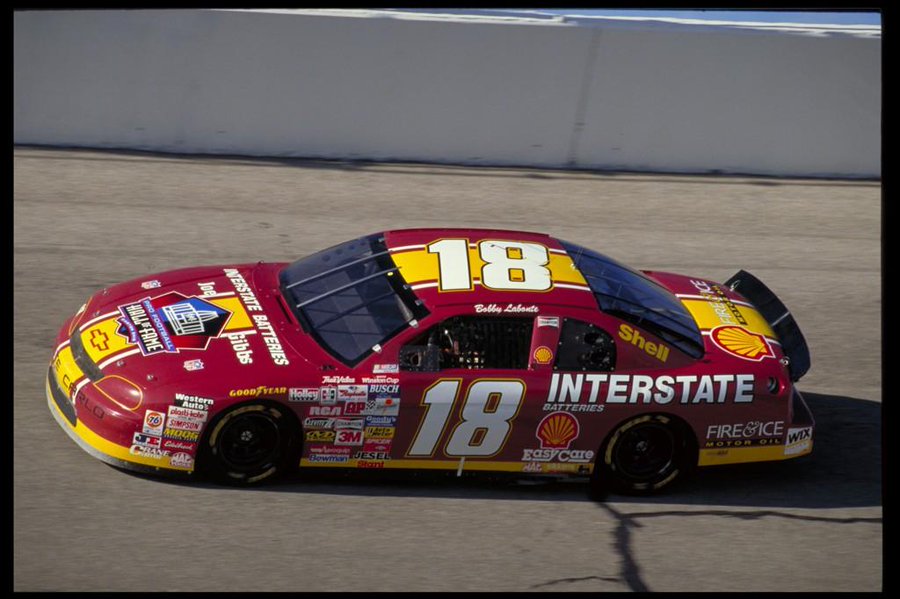
The most successful, of course, being Joe Gibbs Racing, owned by former Washington Redskins (now Commanders) head coach Joe Gibbs. By 1992, Coach Gibbs had already won three superbowls in Washington, and was looking for a new challenge. That year saw the debut of Joe Gibbs Racing, fielding the now-iconic No. 18 Interstate Batteries Chevrolet with Dale Jarrett at the helm.
Jarrett and Gibbs saw decent success in their first year, with eight top-10 finishes and a final rank of 19th. In 1993, Joe Gibbs Racing scored their first win in the Great American Race. Only two years after conquering the Super Bowl, Joe Gibbs would again conquer the Super Bowl of auto racing.
Gibbs won his first NASCAR title in 2000 with Bobby Labonte piloting that same mean-green 18 to four wins. JGR would continue to be a title contender year in and year out, even into the present day as Denny Hamlin piloted Coach Gibbs’ No. 11 to second place in the points standings.
Joining Joe Gibbs as Super Bowl winning car owners was Green Bay Packers quarterback Brett Favre.
Jarrett/Favre Motorsports, co-owned by that same Dale Jarrett, fielded the No. 11 car in the NASCAR O’Reilly Auto Parts Series (then known as the Busch Series) for the 1999 and 2000 seasons.
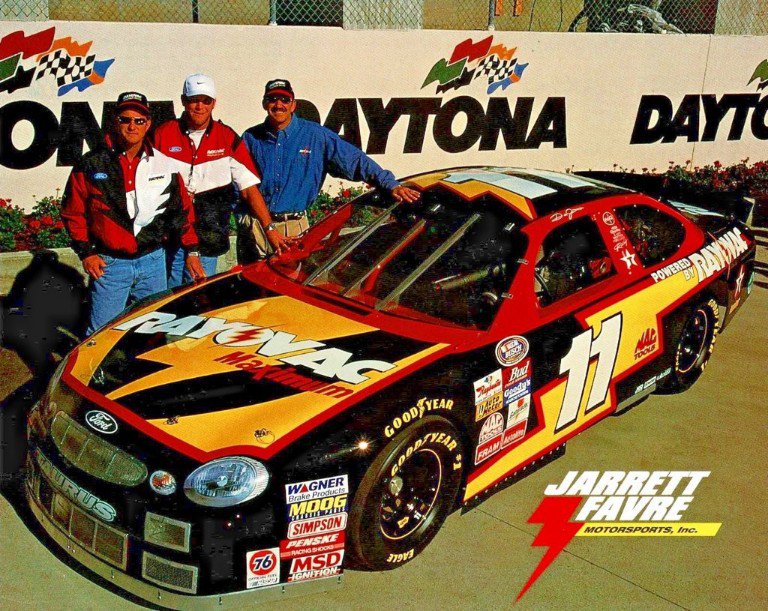
The team’s first race was their peak of competition, as driver Kenny Irwin Jr. drove to a fifth place finish at Texas Motor Speedway. Irwin’s second fifth place finish at Dover later that year was the team’s final top-10 as Jason Jarrett, son of Dale, took over driving duties for the 2000 season and could only muster a 17th place. A range of drivers were tapped for the No. 11 but none were able to find success.
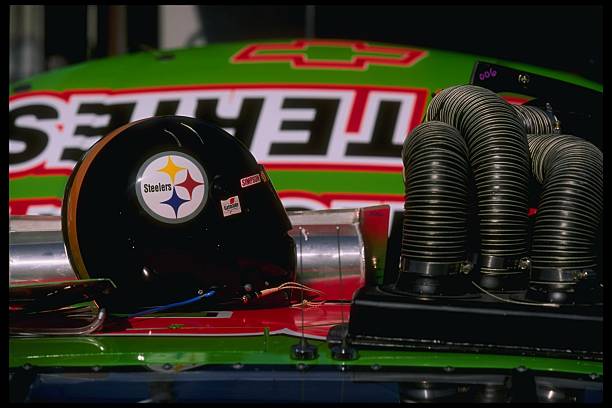
The highlight of Jarrett/Favre Motorsports’ tenure in the Busch Series was the Green Bay Packers paint scheme, driven by Dale Jarrett in the 1999 race at Darlington Raceway. As sponsorship dried up, Jarrett/Favre Motorsports closed their doors by the end of 2000.
Someone who wished they could’ve joined the club of superbowl winning car owners was Miami Dolphins Quarterback Dan Marino.
In the mid-to-late 90s, former Cup Series champion Bill Elliott was driving for his own team, Bill Elliott Racing, in the No. 94. And, come 1998, Elliott’s team would expand to two full-time cars, forming a partnership with Marino to create the No. 13 team. Piloted by Jerry Nadeau and sporting the Dolphins’ iconic teal and orange, the team was renamed to Elliott-Marino Racing.
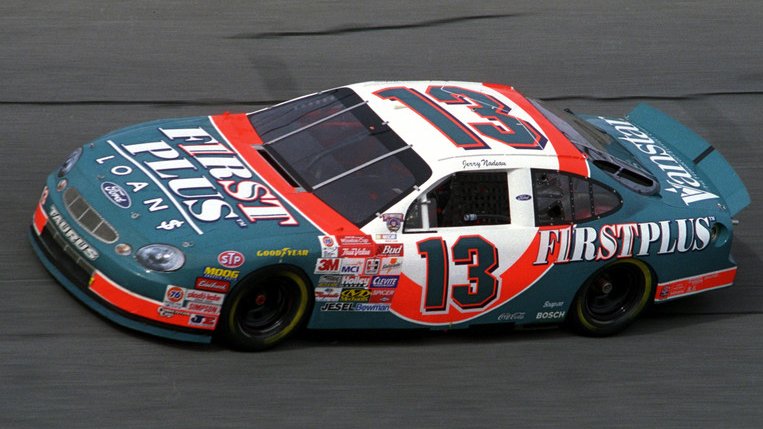
Nadeau piloted the car for half the season, mustering a best finish of 21st, before being dropped for a series of drivers including Dennis Setzer, Wally Dallenbach Jr., Tom Hubert, and Ted Musgrave. Musgrave managed to find some success in the car, scoring the team a fifth place finish at Phoenix.
Sponsor for the No. 13, FirstPlus financial group, was sued by Elliott-Marino Racing for failing to make its contract payments. Marino left the partnership with Elliott after it became clear that FirstPlus could not continue its sponsorship. The No. 13 would make its final appearance at the following year’s Daytona 500, where it failed to qualify.
In some cases, NFL players are more interested in running races than running a 40-yard dash.
In 1994 Mike Cofer, multi-time Super Bowl winning kicker for the San Francisco 49ers, traded the cleats for racing boots by competing full-time in the NASCAR Southwest Series.
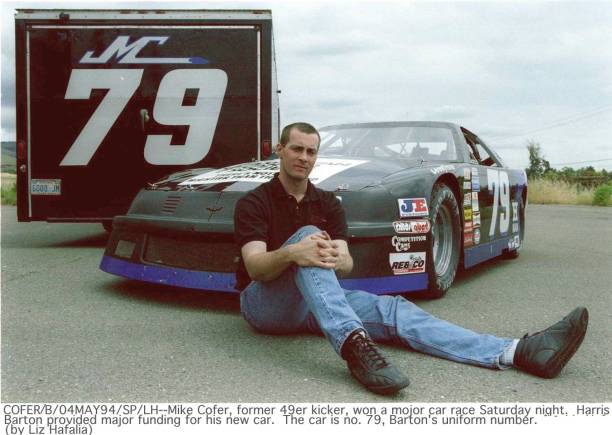
Driving for JMC Enterprises, Cofer had a successful first year in the series. The former all-pro scored three poles, a win at Stockton Speedway, and rookie of the year honours.
Cofer was offered a seat in the inaugural season of the NASCAR Truck Series but declined, instead returning to the sideline as kicking coach for the Carolina Panthers.
Cofer’s last NASCAR starts came in the truck series in 2002 with two starts for Quality Motorsports and his last coming for Rick Ware’s Ware Racing Enterprises, the NASCAR equivalent of the Carolina Panthers.
But nowhere is the influence of pro-football more impactful than on pit road. With athleticism being of the utmost importance in the trenches, hiring regular mechanics and engineers won’t cut it. Instead, NASCAR teams have been employing former NFL and college football players and training them as mechanics for years.
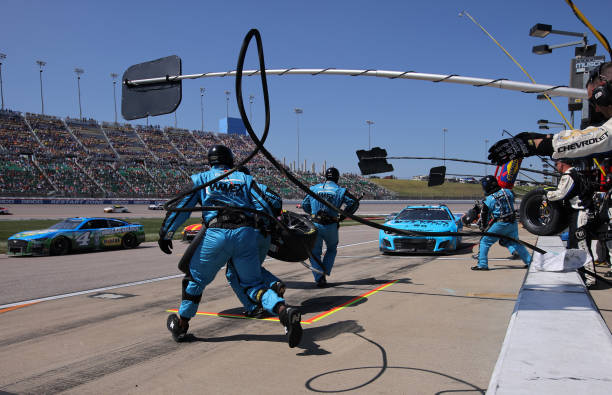
The skills of the gridiron, dedication to film study, speed on your feet, and adaptation to less than ideal conditions are the most important skills to be a football player and a pitcrew member.
As the popularity of the NFL has grown steadily over the last two decades, NASCAR’s popularity has gone the other direction. Even through its tough times, the partnership of these two American institutions still runs deep. NFL players are regulars in the pre-race spectaculars, waving flags, driving the pace car and shouting out the most famous words in motorsports. In fact, the teams listed above are only a fraction of what NFL players, coaches and personnel have done in NASCAR over the years.
Throughout its darkest times, NASCAR and the NFL will always be linked together.
American icons, always intertwined.
Featured Image Credits: GettyImages/David Taylor
 pitboxpress.com