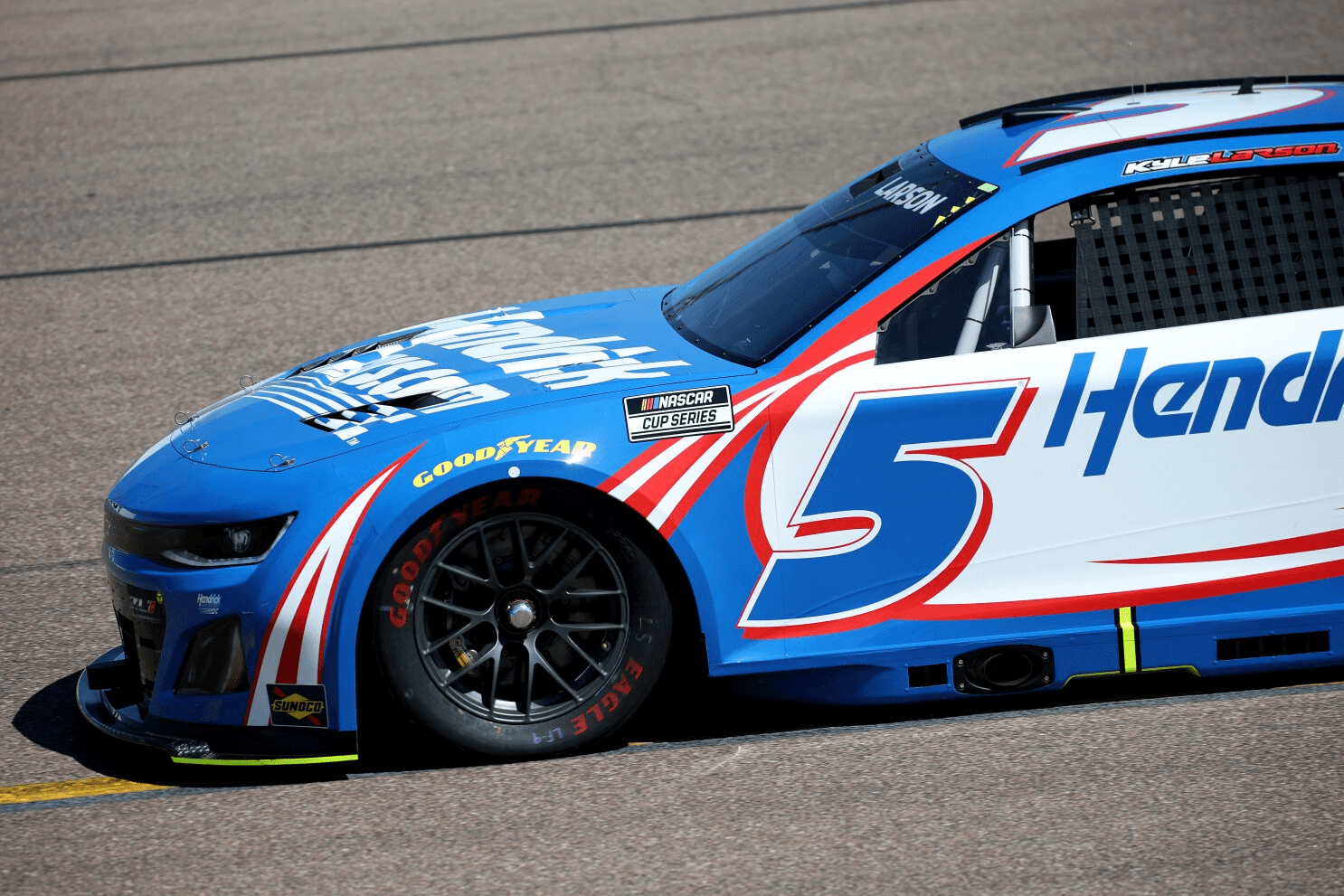
After two successful experiments with the option tire at Richmond last season and Phoenix this past weekend, there’s nothing from stopping NASCAR and Goodyear from bringing a softer, alternate tire compound to a number of tracks on the Cup Series calendar.
The thinking behind a majority of the following selections revolves around these tracks having low banking in the corners that won’t put too much stress on the sidewall of these softer compound tires.
Nobody wants to see the 2008 Brickyard 400 again.
(All of these tracks will be listed in the order of where they arrive on the schedule.)
Race 7: Martinsville
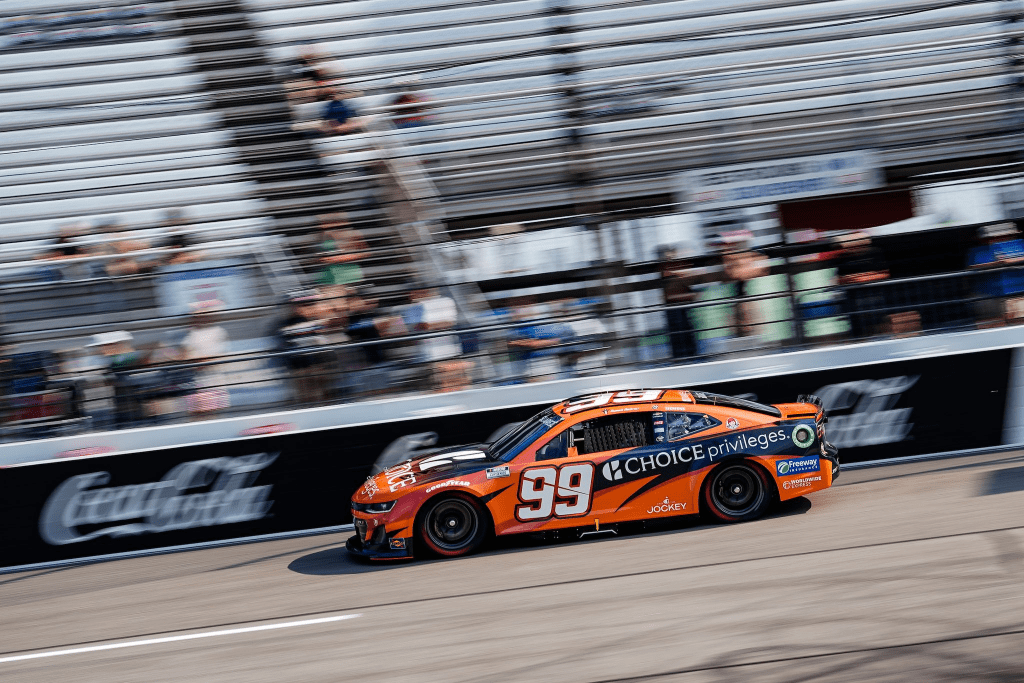
Last season’s penultimate race took place at Martinsville where Ryan Blaney rode a moderate tire advantage through a long run to score his second straight Xfinity 500 victory.
The tire brought to the fall race provided a much more digestible racing product than last year’s spring race, with the weather at the fall race being roughly the same at both races.
Martinsville must put on good races; it is a hallmark of NASCAR racing. Having this tire at the Paperclip could make for a thrilling event full of bumper-to-bumper action, the reason fans pay the admission price.
While Martinsville is roughly half the size of Phoenix, the better braking system on the NextGen car should lend to a softer tire working on NASCAR’s shortest short track.
400 laps at Martinsville would prove once and for all whether this tire can handle hard braking.
All-Star Race at North Wilkesboro
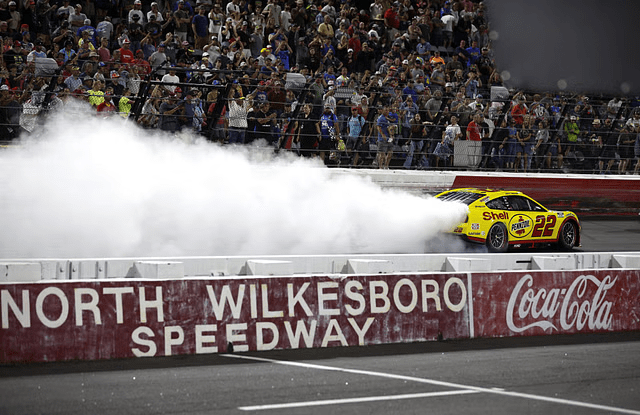
I won’t spend too much time on this because last year’s iteration of the All-Star Race was the unofficial debut of the softer option tire.
The issue was that Joey Logano logged laps in the several hundreds on the option tire at North Wilkesboro in preparation for the All-Star Race where he led 199 of 200 laps in a thorough drubbing of the best in the sport.
Since it is an exhibition race, North Wilkesboro is ripe for a wrinkle with such a young track surface that features flat, but variable banking that allows the groove to spread out almost all the way to the wall.
Race 14: Nashville
This would be the option tire’s first real test as Nashville — standing at 1.33 miles in length — races much more like a true intermediate track than Phoenix, Richmond, or any of the other tracks I’ve mentioned to this point.
Nashville Superspeedway owns turns banked at a moderate 14°, low enough that the sidewall won’t have too much load on it compared to somewhere like Kansas or Homestead but high enough that the wear rate is really being tested.
The option tire would see its highest sustained speeds to this point due to the banking and length of the track, and given that Nashville’s surface remains one of the oldest and most worn on the circuit, this would easily be the biggest test it would face thus far.
The most outstanding concern for a race like this would be the threat of failures and gauging exactly how long the tire is able to last. At Phoenix, Joey Logano pushed his alternate tire 70 laps. Translate that to Nashville — a longer, faster, and banked steeper track — and it might only last 53 laps at the absolute best.
Race 17: Pocono
I would need to see successful tire test data and successful data from Nashville before I would add an option tire to this race, but this is all hypothetical.
As was previously stated in this article, nobody wants to see a sequel to the 2008 Brickyard 400, but why not aim for the next best track for an option tire experiment?
Pocono stands as a 2.5-mile oval with three unique corners (us math nerds call this a scalene triangle.) Turn 1 is banked at 14°, just like Nashville Superspeedway before it. Turn 2 is banked at 8°, profiled similar to one of Indianapolis’ turns, and Turn 3 is banked at 6°, fashioned like one of the turns at the Milwaukee Mile.
The biggest red flag and hesitation to this idea remains the high speeds where the NextGen car can pull over 200mph at the very top end coming to the end of the straight, so the braking and ability to withstand the flexion drivers will ask of them will certainly come into question.
On the bright side, let’s bring back Joey Logano’s 70-mile number from Phoenix and apply it to Pocono’s mammoth 2.5-mile layout, and a tire run on the soft set could take you about 28 laps, which could carry a driver through half of the second and third stages.
If the option tire can make it out of Pocono without major issues, it can survive practically anywhere on the Cup Series calendar.
Race 20: Sonoma
It is going to be HOT in northern California at this time of year, so much so that the grass around the race track will likely be grey, brown, and dead.
Looking back to last year’s race, it’s uncertain whether the new track surface with high heat made the tire Goodyear brought to Sonoma wear so severely throughout the day.
Regardless, this would be the best road course on the schedule to institute a softer option tire. Sonoma contains a number of treacherous corners and a plethora of elevation changes that would most certainly test the constitution of the tire.
With just 110 laps set to run at Sonoma in mid-July, the heat and the relatively fresh track surface could present problems on top of the other concerns with load and elevation changes, but again, it’s better to try it here compared to any of the road courses.
Race 25: Richmond
A sequel at the All-Star Race and another in the penultimate race of the regular season.
Richmond’s aging surface remains a playground for tire experiments, so hopefully, Goodyear will be extra aggressive if they bring the option tire back to the Virginia state capital.
While it would be nice if one of NASCAR’s oldest facilities got a true race without engineered wrinkles, last year’s tire strategy turned what could have been seen as a dull race into an intriguing experiment that kept fans gripped to the television into the final laps as Daniel Suárez tried to track down the leaders on option tires.
The Overtime finish soured an otherwise great race, and further penalty talk overshadowed the influence of the option tire on last year’s Cook Out 400. We can only hope that won’t ever happen again should the option tire make its grand return to the Action Track.
Race 28: Gateway – Round of 16, Race 2
Yes, I want to bring the option tire to the Playoffs already, but for this particular track (and the next one on this list), there is great evidence to support it.
As unique as Phoenix Raceway and its layout are, two track exist that are somewhat similar; one of them is World Wide Technology Speedway at Gateway.
Gateway stands about a quarter-mile longer than Phoenix, which means there is likely to be high speeds going into the turns. However, turns 1 & 2 at Phoenix are banked at 9°, the same as turns 3 & 4 at Gateway. While we’re at it, let’s look at turns 3 & 4 at Phoenix, which are banked at 11°, the same as turns 1 & 2 at Gateway.
In essence, Gateway is a sister track to Phoenix, and as such, it should be a shoo-in for using this option tire even if none of the other tracks I’ve suggested get to use it.
Race 30: New Hampshire – Round of 12, Race 1
Remember in the last portion about Gateway where I mentioned there were two (2) tracks that shared characteristics to Phoenix Raceway but only mentioned one?
That’s called foreshadowing, and this is a quick payoff: New Hampshire is the third of the sister tracks.
A 1-mile oval just like Phoenix, New Hampshire’s shape is much more orthodox compared to Phoenix, which features a definitive dogleg and confounding start-finish line placement.
Loudon is very similar to the aforementioned Milwaukee Mile in that it’s a high-speed oval with long straights and low-banked tight turns. Loudon’s 7° of banking in both turns (and 2° on the apron) provoke drivers to take varying entries and exits to the corners to make their car go as fast as possible.
In a 300-mile, 300-lap race, an option tire would be a great wrinkle to fold into the first race of the Round of 12, something that’ll give stage points to teams that might be starting the round in the hole.
On top of it all, we already saw a significant rain race take place in Loudon last year with a much softer tire to tackle the wet weather conditions, so taking it to the next level and bringing an option tire to New Hampshire would likely be a welcomed idea by fans.
(Top Photo Credit: Chris Graythen/Getty Images)
 pitboxpress.com
One thought on “Option Tires: Where To Use Them Next”