Rumors have swirled in the NASCAR community about what could possibly happen to the sport of stock car auto racing in America when the first inklings of a potential lawsuit trickled into the NASCAR fan base after NASCAR’s “take-it-or-leave-it” offer to its Cup Series owners prior to the 2024 Playoffs.
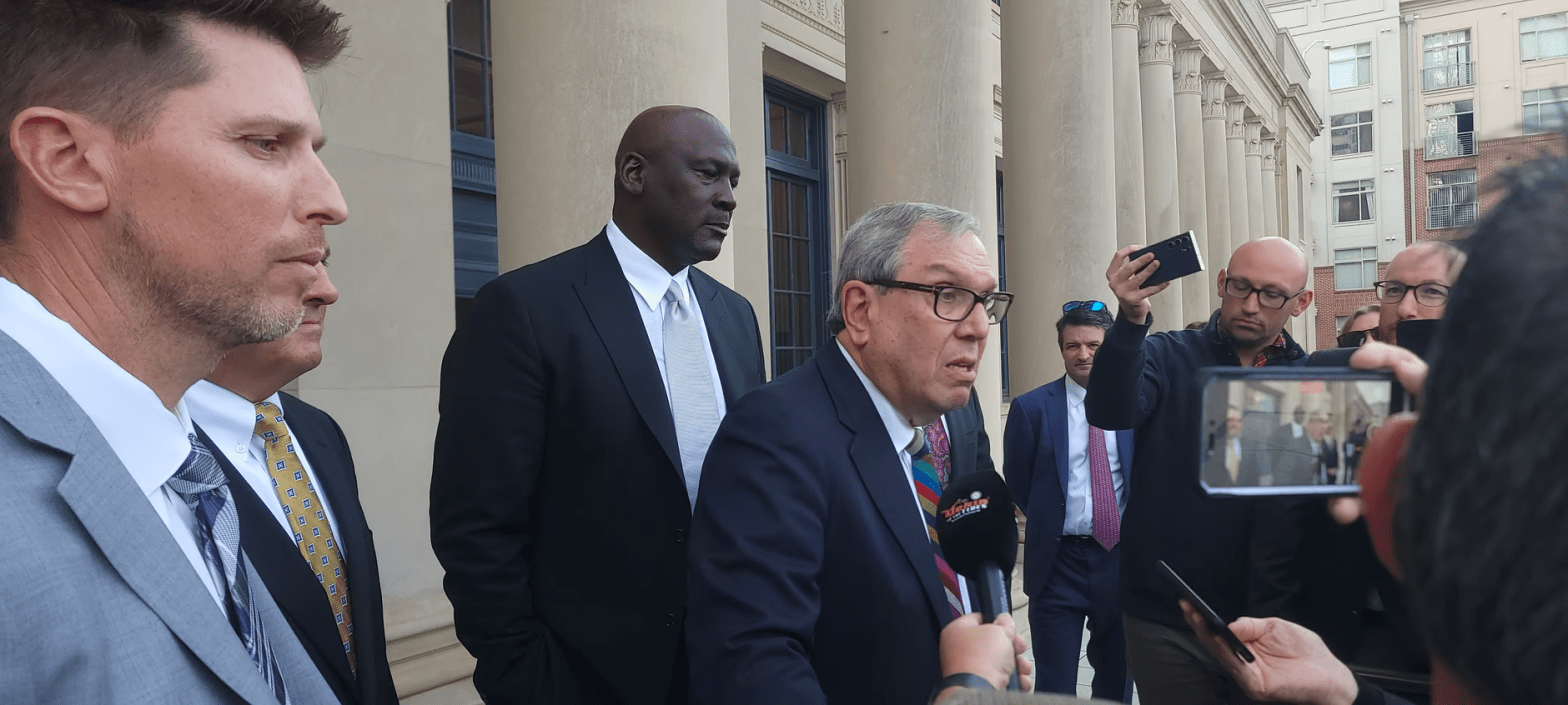
On October 2, 2024, those rumors picked up steam as 23XI Racing and Front Row Motorsports filed a federal antitrust lawsuit against NASCAR and its current CEO and chairman, Jim France.
Since that day, NASCAR filed a motion to dismiss the lawsuit and the subsequent preliminary injunction filed by the teams to operate and earn money like chartered teams (each team currently owns three charters apiece.) Both of those motions were denied by Judge Kenneth Bell late last year, sending the case to trial that is set to commence later this year.
Just this week, NASCAR filed a countersuit against 23XI and FRM ownership on the grounds that the teams were actually the ones in violation of antitrust laws, claiming that teams engaged in behavior with other team owners similar to that of a cartel. Yes, they actually used that word multiple times in the brief.
If you’d like a more detailed breakdown of the case and its many twists and turns, check out FOX Sports’ Bob Pockrass’ recap of the case and each of its main events.
I am an avid sports watcher and know a fair amount of how each sports league got to be where it is today. As such, I have a few ideas as to how all of this could shake out in the event NASCAR fails to prove they are not a monopoly in the court of law.
The Executives
One of the first actions of a leadership restructure at NASCAR would require the France family to potentially abdicate their ownership and control of the sport.
In that event, most high-level executives would relinquish their positions, including NASCAR president Steve Phelps, COO Steve O’Donnell, CEO Jim France, and senior VP of racing development and strategy Ben Kennedy.
All of this would be done because the sport would be considered a nonprofit trade association like the NFL where a board of governors (which would likely be the owner or a designated representative from each race team) would come together to vote on a commissioner.
I would lean towards the owners of NASCAR teams to opt for someone like Ben Kennedy.
If I had to take a guess, the team owners won’t want to completely alienate the France family, an entity that would still own IMSA and all of the race tracks that are currently under their umbrella. This also would maintain continuity that could be pivotal to getting the sport through such a turbulent time.
As commissioner, Kennedy would effectively become a voice for the owners like Roger Goodell and Adam Silver are for the NFL and NBA, respectively. Commissioners act as the CEO of their respective leagues while maintaining positive relations with their unionized workforce.
A Drivers’ Union
The next aspect to tackle revolves around unionizing the drivers. This would be done after the commissioner and board of governors orchestrate a constitution and rulebook for the revamped league that better fits the desires and necessities of the new ownership.
A drivers’ union would need an executive director and an active competitor voted on by the drivers to act as union president. If Dale Earnhardt Jr. is not on the board of governors as an owner, I believe he would be a great pick for the executive director of the NASCAR Drivers’ Union with Christopher Bell as president.
Earnhardt would go about collectively bargaining with the owners about how revenue would be divided amongst the owners, the drivers, the sanctioning body’s personnel, and the race tracks.
Bell’s role would consist of him advocating for his fellow drivers, making sure each team has uniform standards for their treatment of drivers while bringing to light anything that teams are doing to infringe upon drivers’ rights.
Instituting a drivers’ union and the implementation of a collective bargaining agreement (CBA) could lead to collaboration on aerodynamic packages as well as an increase in on-track testing and changes to the season schedule — a much more collaborative model than the one that currently exists.
The Tracks
I touched on this in an earlier portion, but I’d like to expand upon that earlier blurb about what happens to the tracks NASCAR currently owns. The sanctioning body folded International Speedway Corporation (ISC) into itself in 2019, and their list of properties includes:
Bowman Gray Stadium, Chicagoland Speedway, Darlington Raceway, Daytona International Speedway, Flat Rock Speedway, Homestead-Miami Speedway, Iowa Speedway, Kansas Speedway, Martinsville Speedway, Michigan International Raceway, Phoenix Raceway, Richmond Raceway, Road Atlanta, Route 66 Raceway, Sebring International Raceway, Talladega Superspeedway, Toledo Speedway, Watkins Glen International, and the grounds of what was Auto Club Speedway.
My expectation would be that the France family will continue to own these facilities as the tracks themselves are not run as a monopoly. A worry I have about this lawsuit is that the France family will take their tracks and go home, refusing to allow NASCAR to run at these tracks.
With Ben Kennedy at the helm as commissioner, the sour grapes should be assuaged for as long as the fallout of this lawsuit is felt. Besides, owning the tracks and those properties lined Bruton Smith’s pockets for decades and made him a billionaire, leading me to believe the France family will be just fine, financially speaking.
The France family would also still own IMSA as they have yet to suffer any existential antitrust threat from anybody among their team owners, so their thirst for power will still be satiated by another sports entity that they’ll still maintain.
Drastic changes to NASCAR’s structuring could lead to less dates being allocated to France-owned facilities, which could force the Frances’ hand into hosting events for other motorsports. This is something the family has curtailed since folding ISC into NASCAR.
With less organizational hurdles put in place by a sanctioning body that is chock-full of conflicts of interest, the NASCAR Cup Series schedule could blossom under team-led ownership, prioritizing tracks that provide the best possible racing for the drivers and teams.
That could lead to drivers and teams traveling across the globe to different courses or going to domestic facilities that have yet to receive a visit from the Cup Series.
The Cars
As far as the NextGen car is concerned, all of those contracts would be null and void in the event that the sport is reformed and owned by the teams, meaning the new board of governors and commissioner would need to renegotiate those agreements to maintain some semblance of the status quo.
One wrinkle could be that the teams want to create their own car, one they would collaborate with the drivers’ union to construct that would keep the drivers safe while maintaining a strong, competitive on-track product.
Essentially, I expect the NextGen platform to remain as the transition takes place, but I suspect the drivers and teams would make alterations to the car in the event that they’re given enhanced control of the series itself.
The Rest
Each individual racing series within NASCAR would likely have their own systems instituted similar to the Cup Series where a unified owners group in each series will help construct a more comprehensive and sensible driver licensing system than NASCAR currently has.
That means everything from the Xfinity Series all the way to the NASCAR Brasil Series would be part of a greater ladder system that feeds into the NASCAR Cup Series, similar to the exhaustive apparatus surrounding Formula 1.
This new licensing system could lead to less dangerous situations on the race track because drivers would be clearly and wholly vetted by the sanctioning body before entering the next level of competition.
One of the great unknowns in this thought exercise is: What would happen to ARCA?
In short, I don’t know. ARCA could be a major factor in winning this case for the teams as its 2018 acquisition by NASCAR could be seen as NASCAR removing a competitor in the stock-car space and absorbing it.
I would imagine NASCAR losing the lawsuit would lead to ARCA being splintered off yet again, but I worry ARCA wouldn’t be able to continue for much longer without NASCAR’s assistance. Perhaps new leadership would work something out where ARCA is considered part of the greater NASCAR ladder system, which would lead to some funding flowing from NASCAR to ARCA.
(Top Photo Credit: Sydney Haulenbeek/Courthouse News)
 pitboxpress.com
2 thoughts on “What NASCAR Could Look Like If They Lose Their Antitrust Case”