The sport of American stock-car racing emerged from the confetti and controversy of the 2016 NASCAR Sprint Cup Series season with a new idea to liven up their competition.
If you’ve consumed the sport at all in the last eight seasons, you have run into this newer phenomenon known as “stage racing”.
Implemented across all three national series prior to the start of the 2017 NASCAR season, stage racing allows the sanctioning body to split the race up into three (or, in the case of the Coca-Cola 600, four) stages.
The top-10 drivers at the end of the first two (or three) stages are awarded “stage points” in descending order, meaning 1st place gets 10 points and 10th place earns 1 point.
In addition to the 10 stage points, the stage winner is given one Playoff Point to be added back to the driver’s total at the end of the regular season and throughout the different rounds of the postseason.
Over the years, stage racing hasn’t changed much, but it should. Here are three ways I would fix stage racing for the foreseeable future:
1) The Lengths Are The Key
According to Sportskeeda’s Brian Thornsburg, stages are set by the rulebook. The rulebook allegedly states that the sport splits the first 60% of its races in half while leaving the remaining 40% untouched.
This is silly and bad.
Stages need to be catered to the track and scheduled distance. While having a simple formula seems like a good idea in theory, it has the potential to disrupt the flow of the overall show.
The racing in this spec series could be better than it is right now, and all it would require the sport to do is adjust the stage lengths.
In particular, I want the third stage to be comprised of at minimum 50% of the race’s total laps.
Let’s take a look at Dover Raceway’s 400-mile event from this past season:
- Stage 1 ended on lap 120
- Stage 2 ended on lap 250 (130 laps)
- Stage 3 ended on lap 400 (150 laps)
One of the initial aims of stage racing was to produce better on-track action throughout the entire race rather than drivers “saving their equipment” until the end.
The best way to maximize this would be to have a “short run” to start the race.
For the uninitiated, 120 laps at Dover Raceway is far from a short run at the 1-mile concrete oval. This makes pit strategy super easy to predict as most teams will simply split the stages in half, nearly eliminating the strategy component of the race.
Instead, let’s craft the Dover race in my vision of 400 laps with stage racing.
- Stage 1 ends after lap 40
- Stage 2 ends after lap 160 (120 laps)
- Stage 3 ends after lap 400 (240 laps)
Through this model, the race is broken into three unique segments that push the drivers and teams in completely different ways.
The first stage focuses on a short run where drivers run just long enough to know how their cars feel in the middle-to-late part of a tire run.
The second stage focuses on the longer run and forces teams to complete a green-flag pit stop should a timely caution not fly. Teams could even opt to service their cars twice during this time if tire wear/poor handling is severe enough that it necessitates a second stop.
Finally, the third stage at Dover of 240 laps would force teams down pit road more for tires, fuel, and adjustments. More trips down pit road creates more drama on the track as it produces a higher volume of differing strategies. Basically, a longer third stage allows for more comers-and-goers.
Let’s break down a track that seemingly has no issues at the moment: Kansas Speedway.
A 400-miler at Kansas runs for 267 laps, and here’s how the stages break down:
- Stage 1 ends on lap 80
- Stage 2 ends on lap 165 (85 laps)
- Stage 3 ends on lap 267 (102 laps)
NASCAR nearly breaks this race up into thirds for no good reason. If the intent is to draw viewers in from lap 1 to lap 267, this is not a great strategy for stage lengths.
Here’s my revision:
- Stage 1 ends on lap 25
- Stage 2 ends on lap 90 (65 laps)
- Stage 3 ends on lap 267 (177 laps)
A short first run of 30 laps cuts a green-flag pit stop out of the first run and places it back into the third stage where the race isn’t to a stage-ending caution, but for the win.
The second stage requires teams to either split the stage to maximize tire life, or teams could elect to stretch their fuel strategy to earn stage points, assuming the fastest car that pits can’t overcome the delta to the best car that hasn’t stopped.
Expanding the third stage opens up the toolboxes of every crew chief on pit road.
If a car performs better on the long run, teams could choose to go for a two-stop strategy. Alternatively, drivers better on the short run could decide to get tires an extra time, so as not to struggle later in the run when the cars/the track gets away from them.
Finally, let’s take this theory to road courses where, ideally, stage racing is completely extinct.
Sonoma Raceway has suffered mightily to find popularity from the NASCAR fanbase in the stage racing era because stage racing (and particularly, stage cautions) ruins the flow of the on-track action with a car that makes it even more difficult to pass on road courses than ever before.
For the 2024 edition of the Toyota/Save Mart 350(K), NASCAR followed my line of thinking to a point, opting for a 55-lap final stage that set up a very thrilling ending.
- Stage 1 ended after lap 25
- Stage 2 ended after lap 55 (30 laps)
- Stage 3 ended after lap 110 (55 laps)
While this is a move in the right direction, I have an alternative to this sequencing.
- Stage 1 ends after lap 10
- Stage 2 ends after lap 30 (20 laps)
- Stage 3 ends after lap 110 (80 laps)
This sequencing puts teams and drivers in a tough spot. If the car handles well through stage 1, teams can stay on track and collect stage points while working out their long-run speed in the longer second stage.
On the other hand, pitting on or before lap 8 with an ill-handling machine allows you to adjust and put on fresh rubber to pass cars at the beginning of the second stage, perhaps putting teams in range of getting points.
According to Fox Sports’ Bob Pockrass, the NextGen car went 38-41 laps on a tank of gas at Sonoma this season, meaning teams could theoretically enter the final stage having not pitted.
Other teams may have pitted twice by lap 32 to fix issues they have with their cars. The rest of the teams could have pitted at the end of the first stage while opting to stay out at the end of stage 2 for track position.
From there, strategy takes the forefront as cars that pitted at the end of stage 2 could theoretically make it to the end of the race on one more stop while most others will need to pit twice.
The best part of all of this? This makes the racing more exciting even if there aren’t cautions for cause.
Everything I’ve just described to you is how a race would play out without seeing the yellow flag for debris or an incident on the race track, something NASCAR seems to forget is possible.
Not only that, superspeedways would be immensely improved using my formula as fuel strategy becomes less of a focus for teams in the first and second stages.
Instead of splitting the race at roughly 30%-30%-40%, I suggest we make the split closer to 10%-20%-70%. Depending on how some circuits are laid out, this formula doesn’t always work out smoothly, so here is a list of my entire 2025 proposal for stage lengths in the Cup Series.
2) Getting Rid of the Stage Caution
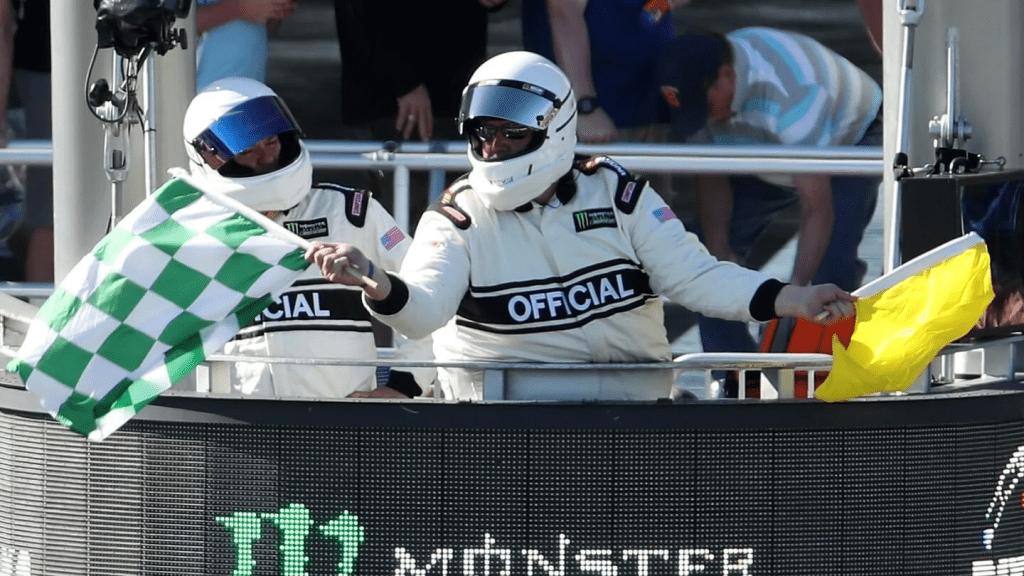
NASCAR can still go to commercial after the first and second stages end whether a caution is thrown or not.
The desire to throw a yellow to “stack the field back up” is mind-numbingly misguided. NASCAR uses a safety measure to bolster the “entertainment factor” of a race, which is wrong. Stage cautions save the teams, the drivers, and the fans nothing, but especially not time.
Stage cautions often last for an extraordinary amount of time, but why? No, seriously. Why?
The safety crews aren’t picking up debris. They aren’t hauling cars back to the garage area. The jet dryers aren’t being dispatched to go clean up and dry any fluids on the circuit.
Timing and scoring are done electronically. Why does it take so long to go back to green?
Of the 72 stages completed this season, just 12 of them ended prematurely due to a caution for cause. Would you like to know how many times stage cautions took longer than five laps?
38 times, at a variety of track types. Here is a detailed breakdown of each stage caution.
These cautions aren’t being thrown to clean something up, so why are fans being deprived of racing action?
NASCAR should treat stage cautions like a caution thrown for a lazy spin: check the track for debris, go through the round(s) of pit stops, and get back going after four or five laps. This shouldn’t be difficult.
On Sunday, the field lost 18 laps of racing under the yellow flag for stage cautions at Phoenix during the title race, and for what exactly? There was nothing to clean up. Just running around at pace car speed for far too long for no good reason.
At the very least, the officials seem to have everything handled as far as stage cautions at road courses are concerned because those often didn’t break three laps, which should be the standard. The same goes for big tracks where they never went over five laps under stage yellow, outside of Michigan’s extreme circumstances.
With all that said, stage caution periods need to be shorter or done away with entirely. Too much idle time spent going 70mph with cars capable of nearly 700hp, all shown on national television.
3) Stop Counting Stage Caution Laps
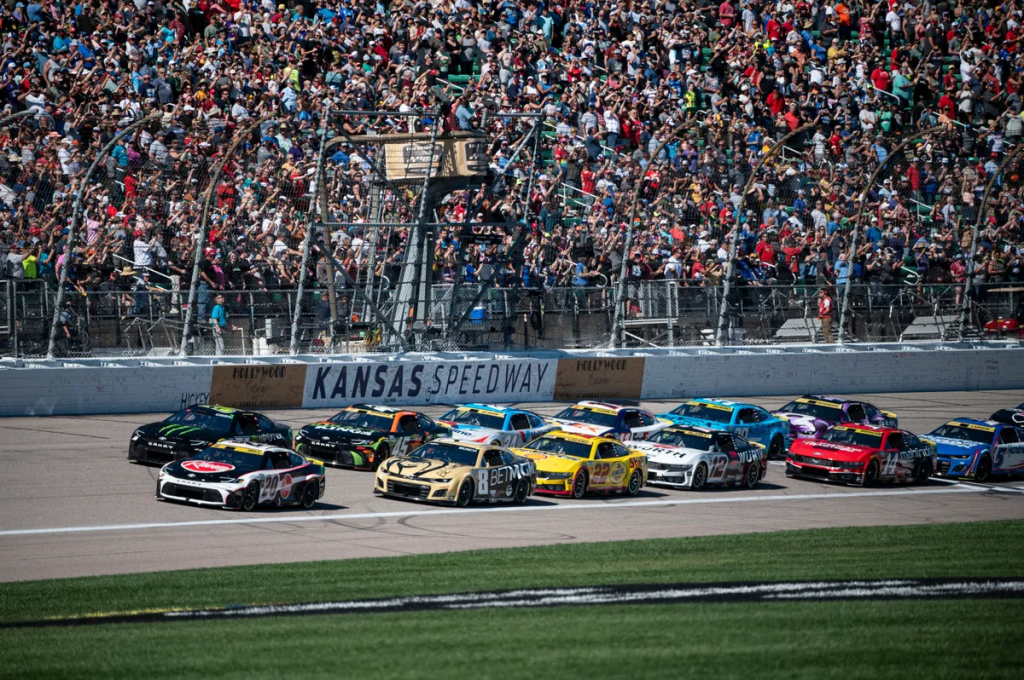
If we must pace senselessly behind the pace car for laps on end, I suggest we stop counting stage caution laps.
If the meaning of the caution flag is already blurred by its use as a gimmick for stage cautions, then ratchet the gimmicking up to make sure fans get the biggest, longest, and best show possible.
It also makes fuel strategy harder to predict for the teams between stages, not knowing how long their driver would stay behind the pace car before seeing the green flag.
Of all the appeals I’ve made to NASCAR, this is the point I stand behind the least because it’s not exactly making the situation better, just more palatable to the fan since the laps won’t count.
Somewhat related, NASCAR should start rounding stages out.
This will help break up long stage cautions. If the laps these cautions are thrown on can be changed season-to-season, changing them during the race should be possible as well.
Earlier this season, Corey Lajoie spun out on lap 17 of stage 1 at the Chicago street race, bringing out the full-course caution flag. What should’ve been a three-lap caution ballooned into a seven-lap parade behind the pace car because the stage ended on lap 20, allowing the inclement weather to move in and take over the race.
This doesn’t need to be overcomplicated. If the race isn’t going to go back under green before the stage is over, award stage points the next time the cars hit the stripe and shorten these stage cautions.
While this only occurs once every three races on average, it’s too common of an issue to ignore like NASCAR has to this point, and it doesn’t appear to be getting better year-over-year.
We love going to races, and we love watching them on TV. We just don’t want to be in the stands or in front of the TV all day; that’s all we ask.
Conclusion
Stage racing isn’t the worst thing to happen to the sport since the Playoffs, even if experts on social media might disagree with that. Stages are just poorly utilized.
The formula to measure the stage lengths fails to maximize the potential of each race by putting the teams into boxes before the race weekend even starts. If even a fraction of the adjustments I suggested were implemented, I could personally guarantee it wouldn’t lose fans, which can’t be said for some of NASCAR’s other gimmicks.
Idle time spent under yellow spells doom for a series that prides itself on its dynamic, high-speed, wheel-to-wheel racing. If NASCAR wants their fans to have more of that, they should find a quicker way to get back to green that doesn’t involve completely missing a rogue tire on the track or a car trapped under a tire barrier.
(This is the second part in a growing series. My next project will be fixing NASCAR Overtime.)
(Top Photo Credit: NASCAR on NBC)
 pitboxpress.com