
In the previous four seasons, Jeff Burton led 285 laps total, 15 laps short of the amount he led at New Hampshire when he single-handedly thumped the competition in 2000.
But, that was six years ago.
That’s when he was racing champions like Dale Earnhardt, Terry Labonte, and Darrell Waltrip. It was bad enough that the stock cars of 2006 looked and drove entirely different from those run in 2000.
Compound that with a new points format, a new team, and a crop of budding contenders to that; some would consider themselves wholly disillusioned with their careers.
But, Jeff Burton, he would not be deterred.
2006: Chasing the Cup
Richard Childress missing out on the Chase for a seventh championship as a car owner for the second straight season simply wasn’t good enough for the curmudgeonly car owner.
Armed with Dave Blaney’s old crew chief Scott Miller and the new and improved Chevrolet Monte Carlo Super Sport (SS), the valiant Virginian marched into Daytona Speedweeks with the wind at his back.
I mean this in a literal sense because Burton and Miller rolled into Florida with a super sporty Cingular Wireless car and landed on pole position for the 48th running of the Daytona 500.
Burton’s bright-orange machine took home a seventh-place result in the first Daytona Duel, maintaining his pole position for the big race.
To this point in his career, Jeff Burton notched just two poles in his entire 12-year Cup career: the 1996 GM Goodwrench Dealer 400 at Michigan and the 2000 Chevrolet Monte Carlo 400 at Richmond.
It had been 190 race weekends since Jeff Burton paced the field to the green flag to open a race. He faced questions about his sponsorship at this very race two years ago, and now, look at him.
Jeff opened his season by leading the first 18 laps of the Daytona 500, staying in the mix for much of the day until Jamie McMurray attempted to make a statement in his first start with Jack Roush.
The fourth-year driver broke traction on his #26 Crown Royal Ford Fusion, veering into Kurt Busch’s new #2 Miller Lite Dodge Charger with 13 laps to go to bring out the race’s ninth caution period.
Jeff was unscathed to that point, even if he hadn’t gotten back to the lead, and surviving to the last 10 laps is a Herculean task. He could win this thing for the first time, joining his brother as a Daytona 500 champion.
A seven-lap dash broke out on the restart with Jimmie Johnson’s Lowe’s Chevy still on the point. In turns 1 & 2, Jamie McMurray made another ill-advised move when Burton’s Chevy threw a block on McMurray in the midpack with three laps left on the board.
Contact was made, shooting Burton into the wall and ruining a promising day.
This damage brought his day to a grinding halt, repairs putting him a lap behind Johnson when the checkered flag fell and relegating the #31 team to 32nd place.
Heading out west brought Burton good fortune. Fontana saw his Cingular Chevy skate to a top-5 and followed it up with a seventh-place run at Las Vegas.
Atlanta couldn’t keep the solid streak alive, knocking Burton to 25th while both Harvick and Bowyer finished even worse. Not exactly a banner day for RCR.
One of Burton’s predecessors in the #30 AOL car — Jeff Green — pinched Burton on the entry to turn 1 a third of the way through Bristol while battling for 20th. The incident snowballed into a terrible day where the team walked out of the track with a disheartening 34th placement.
Martinsville presented a third challenge, this time at the hands of former teammate Kurt Busch. Tensions boiled over after contact between the two Roush castoffs concluded with the Cingular crew having to hammer out the back end of Burton’s car on the way to their third-consecutive awful finish.
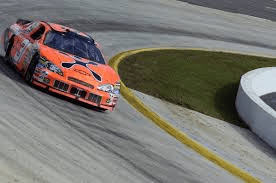
For the next four months, the Cingular Wireless group established themselves as a contender.
Burton picked his way through the pack, gaining 15 spots on the way to sixth place at Texas. Teammate Kevin Harvick brought the organization back to victory lane for the first time in 39 races as Jeff reeled in a top-10.
A poor qualifying run at Talladega failed to hold the amiable veteran back from running up front, bookending the day with his best finish of the season to-date with a fourth-place result.
Contact with former Roush stablemate Mark Martin at Richmond ripped away a potential top-10 run with less than 10 laps to go. Their night could’ve ended there, but Miller and crew repaired the car and wound up 15th.
The hometown humble pie was an outlier with the #31 team dialing in for the next month, scoring four-straight top-10s at Darlington, Charlotte, Dover, and Pocono.
Dover stood out the most. Most would focus on Jeff coming home in fourth position, but if you dive a league deeper, he held the lead for 48 laps in the Neighborhood Excellence 400. A driver that only led seven laps total in 2005 connected on the setup and paced the Nextel Cup field at the Monster Mile.
Burton battled with former teammates Matt Kenseth and Mark Martin for over 100 laps in the middle of the event; that level of experience is unparalleled. Let me explain.
When a driver hasn’t run up front much or in quite some time, some of them lose track of what it takes to be at the front of the field and what is expected of you from your competitors. In addition to that, you get to observe how their cars look and operate at full song, allowing you to compare it to your own.
Basically, you normally need to run up front to know what you need from a race car to win.
Jeff got that in droves duking it out against cars that he used to pilot himself with drivers that raced him with the utmost respect, drivers he could trust.
Sure, it could be argued that the turning point for Jeff would be at Texas when this impeccable streak began, but this super solid run at Dover where he led laps on speed feels like foreshadowing.
The summer stretch kicked off with a rain-shortened race at Michigan that stopped Jeff one spot short of furthering his streak before logging an impressive drive to a seventh-place finish at Sonoma.
Casey Mears mowed Burton down on the exit of turn 2 on lap 17 in the Pepsi 400 at Daytona. Thankfully, the lazy spin lost them positions in the moment and nothing more, rising back up to 15th.
At the season’s halfway point at Chicagoland, Burton and Scott Miller snagged 10 top-10s in the first half of the season, more than Burton had in his RCR career coming into 2006, and they brought a rocket ship for the sixth annual USG Sheetrock 400.

Jeff set the tone for a great weekend, laying down a rapid lap in qualifying and earning his fourth career pole. The brilliant orange Monte Carlo SS made daring three-wide passes on the frontstretch apron in the latter stages after leading early, patiently tracking down Kenseth in the lead.
Following in Jeff Gordon’s tire tracks kept the Cingular Wireless Chevy in the dead zone of dirty air, unable to make a move on Gordon as he hunted the #17. Gordon exacted revenge on Kenseth for an altercation they had at Bristol in the spring, dumping the 2003 champion in turn 2 with four laps left.
The move sent the lead-lap cars into a Green-White-Checkered where Burton fell short to the dominant Gordon, losing out in another compelling episode of The Jeff and Jeff Show.
Jeff locked in. The team collected two more top-10s while tacking on some more laps led at Loudon and Pocono before arriving at the Cathedral of Speed.
Burton struggled to contend at Indy in the past, nabbing two top-10s in 1999 and 2000 but no achievements past the height of his success. Instead of letting the track get to him, Burton etched his name as a pole sitter at Indianapolis Motor Speedway, his third pole of 2006.
His Chevrolet Monte Carlo SS motored to the lead as the green flag flew, commanding the race for 81 of the first 109 laps until Matt Kenseth and Jimmie Johnson snuck by to race for the win.
Burton lost positions consistently in the final 50 circuits, ending the day a disappointing 15th after leading over half of the hallowed Crown Jewel event.
The site of his lowest point the previous season welcomed Burton and the crew back with open arms. Watkins Glen’s winding roads caught a number of drivers off-guard, but not Jeff, whipping right and left to guide his team to an 11th-place result while Harvick raced to RCR’s second win of the year.
With four races left before the Chase, Burton sat 207 points above 11th-place driver Kasey Kahne in the point standings, meaning he just needed a few stress-free weekends to make it comfortably in the postseason.
But, Scott Miller wanted his driver to make noise, a lot of it. He made good on this goal at the fastest track on the circuit in Michigan the following week, garnering his fourth pole of the year.
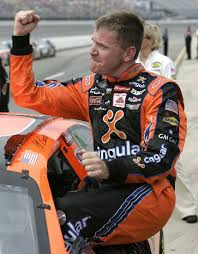
The loudest engine in Brooklyn went out with a bang on the 17th lap of a 200-lap event, spewing and sputtering on the apron with a broken engine. Burton ended the day early in 42nd, his worst finish of the year.
RCR always gave Jeff a great piece for the Bristol night race, and 2006’s iteration of the event would be no different as the Cingular Wireless Chevy lined up beside spring winner Kurt Busch on the front row.
Busch took the point for the first 11 laps before Burton passed him and took control of the Sharpie 500. A hungry grid of competitors went toe-to-toe with the #31 throughout the night, including Dale Jr., Matt Kenseth, Jeff Gordon, and Carl Edwards.
With 120 laps left, Jeff held the top spot for 262 laps, 37 times the amount of laps he led the previous season. In fact, it was only 20 laps less than he led in his previous four seasons in Cup.
Maybe Scott Miller and Jeff Burton just couldn’t keep up with the track or Matt Kenseth and crew chief Robbie Reiser made their car better; whatever the case may be, Jeff slowly drifted back to 9th by lap 500 while he watched his former teammate take his second-straight Bristol night race triumph.
The Cingular Wireless crew kept their car clean at Fontana the next week on the way to a pedestrian 16th-place finish, their worst result since coming home 33rd at Martinsville on April 2nd.
Yes, they spent five months and one day in the NASCAR Cup Series without falling outside the top-15. That is championship-caliber consistency.
Kasey Kahne won the race and closed the gap to the Chase bubble where Jeff would be for the final race of the regular season in Richmond, just 30 points ahead of Kahne. In those days, that was a matter of a few positions.
On the bright side, Jeff could still gain a ton of positions in the points because the margins between drivers in the top-10 were slim outside of Kenseth and Johnson, both of whom ran away from the competition.
Burton’s strong showing in qualifying earned him a seventh front-row start for 2006 in one of the most important races of his career. Meanwhile, Kahne started the night in 20th, meaning he’d have to dice through the grid to make the Chase.
Thanks to Harvick’s fast car, Burton’s teammate took the fight to Johnson in the first 50 laps, showing he had what it takes to run for a title. Their hard racing on a restart opened the door for Jeff to slip by them on lap 42 and control the field for a comfortable 25-lap stint.
Burton’s move gave him five bonus points for leading a lap that would be integral to punching his Chase ticket. Though Kahne grabbed five bonus points of his own later in the night, defending champ Tony Stewart’s bad night plummeted him in the points.
Jeff and Kahne rose while Tony fell, leaving the 2005 champion without the ability to defend his title in the Chase for the Cup as Jeff became a bona-fide title contender for the first time since 2000 with a 9th-place run.
With 10 races remaining, let’s take stock of RCR.
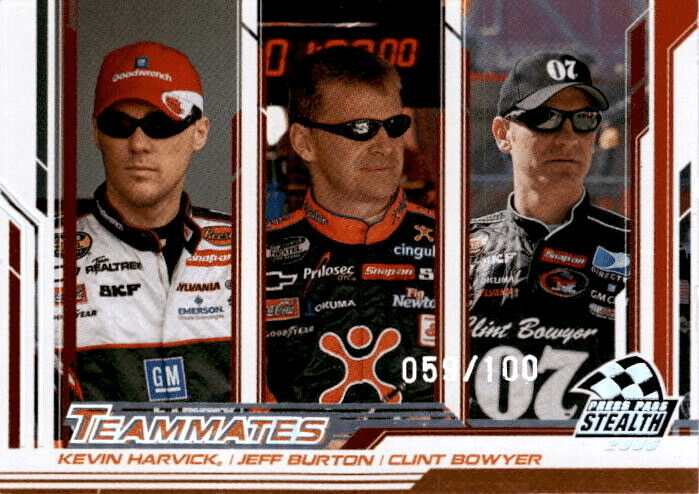
The veteran Burton concluded the regular season with 15 top-10s, but Harvick led the organization with three wins and put the #29 up to third in points going into the Chase. Bowyer put up respectable numbers for a rookie, snatching seven top-10s and climbing to 16th in points.
For the first time since Dale Sr’s passing in 2001, Richard Childress’s race team carried a wave of momentum into the season’s final weeks, and best of all, he had two cars and drivers capable of claiming a Cup title.
Harvick continued to impress in the first round at New Hampshire, clinching the pole, leading the most laps, and winning in convincing fashion as Jeff Burton took the reigns for 50 laps in the middle of the event on his way to seventh place.
Heading into the Monster Mile for round 2 enticed Burton and Miller after their strong performance in the spring, but they qualified 19th, two spots worse than the first race.
Coming into the weekend, an erroneous report alleged that RCR tampered with their wheels to gain an advantage at New Hampshire. The allegations sent shockwaves through the team and electrified an already-determined Burton, denying the claims and declaring that he was ready to “kick butt” at Dover.
Jeff remained around his starting spot for the opening laps. He took evasive action when Tony Stewart lost it in turn 3, taking out fellow Chaser Kasey Kahne in the chaos on lap 12.
A pit stop shortly after lifted the #31 into the top-15. Rumblings of a loose wheel from Jeff crept into the conversation between David Ragan crashes with the second bringing them back down pit road.
The complaints grew louder over the next stretch of green-flag racing as Burton fought a tight Cingular Wireless machine.
What was supposed to be a weekend full of optimism and determination began fading into the distance as Matt Kenseth pulled away.
Slowly but surely, Scott Miller adjusted the car, moving the #31 team to 11th by lap 180 after a pit stop. The race’s seventh caution flew six laps later, bringing the cars that stayed out under the previous caution in for service.
The strategy call from Miller on the previous yellow allowed Jeff to move up to seventh for the next restart where he held serve until another caution halted the action.
Another trip to the pit stall relegated the eldest RCR driver to 14th a little bit past halfway.
While much of the first half of the race was spent under yellow, the field kept their wheels underneath their cars for a true long run, going 84 laps under green.
This longer run allowed Burton to slowly pick his way through the field, getting back up to 11th by the time the caution fell for a Scott Riggs crash with just over 100 laps left.
Burton ducked down into the pits with the rest of the lead-lap cars, and quick service from the Cingular Wireless crew got the Virginia veteran into the top-5 for the first time all day.
Meanwhile, leader Matt Kenseth and crew chief Robbie Reiser were confident over the radio that this would be their last pit stop of the race, not needing to stop again for fuel; however, Reiser made sure to let his driver know that he needed to be smart and watch his fuel gauge, especially if they went caution-free to the end.
Burton restarted fourth and stayed there until teammate Clint Bowyer shot by early in the run. All three of the RCR entries finally climbed their way to the top-10 and had a chance to win with the laps winding down.
That all changed when JJ Yeley brought out the 10th and final caution of the day.
Kenseth and company elected to stick to their plan and stay out on the race track. They had the fastest car in town by a country mile and just 17 laps on their Goodyear Eagles.
Burton and much of the lead-lap runners headed to the pits to fortify their fuel tank for the final stretch, and the Cingular Wireless crew dialed up another solid stop, sending Jeff back out in fourth and first among the cars that pitted.
Standing between Jeff Burton and glory was: rookie Reed Sorenson’s Target Dodge, former teammate Kurt Busch’s Miller Lite Dodge, and former teammate Matt Kenseth’s DeWalt Ford.
On the restart, Burton made light work of some of the faster lapped cars, rising to the top of three-wide in turn 2 to dispatch the obstacles in his path.
The tangerine machine waited patiently behind Sorenson early in the run and pounced when the inexperienced driver’s tires fell off. A few laps later, he pulled up to Busch’s bumper and scooted by him.
With 50 laps and 50 miles remaining, the only person standing in Jeff Burton’s redemption was Kenseth.
A former teammate, a forever friend. Matt Kenseth learned a lot of what made him a champion from listening to Mark Martin and Jeff Burton. The two maintained a great working relationship on the track, even after Burton’s departure from Roush.
It took Jeff just 15 laps to catch Matt from a little over a second back. Jeff’s tires were 17 laps fresher; his car turned so well the entire run, not having to make contact with anyone to eke by them.

It felt inevitable, even as dark clouds popped into the area.
Earlier in the race, it was reported that Kenseth wanted to use the high lane, but he wanted other drivers to break the groove in before he went up and relied on it. As Jeff approached him, Matt fanned out to the middle of the race track in the center of the corner.
The line gave Matt the ability to maximize his exit speed onto the straights while simultaneously blunting any of Burton’s sharp advances.
Jeff took his first peek at the point with 16 to go, sending it underneath the DeWalt #17 in turn 2 before washing up on exit. Burton let off the throttle and fell back in line by the time they made it back to the stripe.
On the call, Bill Weber recounted a conversation Jeff had with Richard Childress when he joined RCR where the famed car owner declared, “I will do whatever it takes to get back on top in this series.” Part of the plan was putting the embattled #31 car into the Chase with a driver that could win a title at NASCAR’s highest level.
Jeff poked and prodded at Kenseth’s advantage by wrapping his car around the apron as Kenseth ripped around the higher side. Coming to nine to go, Jeff throttled up in the center of the corner when Matt chose the bottom, and if you’ve watched a NASCAR race recently, you might think you know what happens.
Rather than move his former teammate out of the way, Burton chose to remain clean and race Kenseth with the utmost respect, opting to pass him clean or not at all.
Around this time, Kenseth radioed into his team in a frenzy, “HOW MANY LAPS LEFT?” Just as Marty Snider relayed the message to the audience, the move was made between turns 1 & 2.
Kenseth entered high like he had been for the last 40 laps. Recognizing that what he’d been doing had gotten him nowhere, Burton followed the #17 a half-groove lower, packing air on the left-rear of Kenseth’s Ford and pushing him up the track.
This slight discrepancy in air forced Kenseth out of the gas more than usual, compromising his superior exit speed. Jeff slid underneath the 2003 champion and assumed the lead for the first time all day with six laps to go.
With Jeff at the top of the pylon and taking center stage, a box appeared on the top left of the screen. It was his wife, Kim.
Kim had been a fixture of race broadcasts in the late-90s as Jeff and the Exide Batteries car and the sport of NASCAR surged to prominence.
She was on the Exide pit box, praying and covering her face with seven to go in 1997 when he won his first race at Texas.
She folded over in her seat on top of the Citgo pit box with 15 to go at Phoenix in 2001 when he won his last race 1,793 days ago.
And, here she is, on top of the Cingular Wireless pit box, five laps from seeing her husband score his first victory in almost five years.
Kenseth went out swinging, taking his car to the highest groove possible to get great runs down the straights around the high-banked 1-miler. He closed back in on the Cingular Wireless car’s bumper, but Burton blocked the #17 into turn 1 with three to go and stymied his progress.
Coming out of turn 2 the next time by, Kenseth’s car bogged down. After getting the caution they needed, they still ended up two laps short of making it to the checkered.
Kenseth stewed in unimaginable silence while he watched his former teammate speed off into the distance.
As Burton rounded turn 4 for the final time, NBC piped into his radio where Jeff fought back tears and said, “Thank you guys so much for bringing me into this deal. You resurrected my career. Thank you!”
When he crossed the line, it ended a 175-race winless streak. Kim jumped up and hugged Scott Miller, the #31 car was on top of the pylon, and Jeff Burton was a winner in the NASCAR Nextel Cup Series, the first time he could say that since Winston left the sport in 2003.
The ever-treacherous Monster Mile that haunted Jeff throughout his promising 2000 season became an oasis for a driver stuck in a seemingly-endless drought.
For the first time since Fontana all the way back in May 1999, Jeff Burton led the Cup Series point standings.
Kenseth drove around and congratulated Jeff before the #31 peeled off the track to go to victory lane where his wife wouldn’t let him get out of the car without first embracing her husband. Their children, Harrison and Paige, got their first taste of NASCAR Nextel Cup victory lane that day, a long awaited return for the Burtons.

The Cingular Wireless squad entered Kansas the following week with a slim six-point advantage over Jeff Gordon’s DuPont team. In an effort to protect his lead, Burton hung out in the top-10 for much of the afternoon, collecting a fifth-place result after several drivers ran out of fuel in the final corners.
Outside of Mark Martin, Jeff was the highest-finishing Chaser and extended his gap in the points over new runner-up driver Denny Hamlin.
Problems at Talladega in the fourth round of the 10-race postseason erased the cushion Burton earned in Kansas, clinging onto a six-point lead over Matt Kenseth with six races to go.
Another intermediate track welcomed the field back home in Charlotte when the Nextel Cup Series visited Lowe’s where Kasey Kahne took the victory while Jeff scooped up another impressive top-5, stretching the lead back out with half of the races out of the way.
The team approached Martinsville with an open mind, but it was a similar story to the spring in that misfortune met them at the worst possible time. On lap 218, Jeff’s title hopes went up in smoke.
It was just the team’s second DNF of the entire season, but with just one car out of the race, the end result was a 42nd-place finish that mirrored their previous DNF at Michigan.
Kenseth’s 11th-place run didn’t exactly capitalize on Burton’s bad day, putting the #31 team 48 points back. With a strong intermediate program, Miller and Burton aimed for a solid run to keep them in the mix for the season’s final three events.
An earlier miscue put Jeff behind the 8-ball in the latter portion of the race, but once green-flag pit stops cycled through, he’d get back on the lead lap with about 30 laps left to grab a good finish.
Unfortunately, the guy Burton supplanted in the #31 car would effectively ruin his season.
Robby Gordon intentionally removed roll-bar padding from the inside of his car and chucked it on the race track, forcing NASCAR to bring out a caution.
The move got Robby back on the lead lap and trapped Jeff a lap down for the rest of the race. Kenseth, Johnson, and Hamlin brought home great finishes and points, leaving Jeff fourth in points, 84 points out.
A blown tire on lap 90 of the Dickies 500 at Texas sealed the coffin, sending the mangled Monte Carlo SS to the garage for repairs. They eventually returned to the track, but a 38th-place effort was all they could muster.
Finishes of 10th at Phoenix and 14th at Homestead did little to influence the #31 team’s outcome. Just a month ago, they were in the catbird seat to win the title, but in the shadow of the swaying palm trees in Miami, Burton had to watch another Hendrick superstar emerge as a Cup champion.
When would it be his turn?
In the next installment of Falling Short, Jeff Burton sails into 2007 and 2008 with a full head of steam, ready to keep contending even as the sport rapidly evolves.
(Top Photo Credit: Richard Childress Racing)
 pitboxpress.com