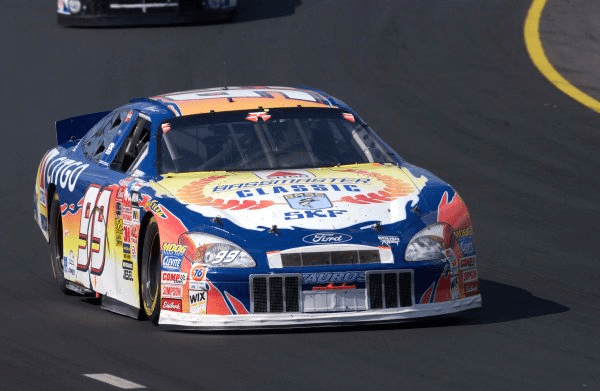
The year 2000 brought with it a multitude of memories for the #99 Roush Racing team.
Wins at Las Vegas, Phoenix, Daytona, and the perfect race at Loudon drew Jeff Burton and the Citgo Crew close to Bobby Labonte’s inimitable Interstate Batteries bunch, but it wasn’t enough to claim their maiden title.
The team regrouped for 2001, a year teeming with promise as the schedule got extended to 36 races, the most the Winston Cup Series had ever run in the modern era. With all the gas they’d ever need onboard as a sponsor, the #99 team looked ahead with enthusiasm.
2001-2004: The Dark Ages
A number of explanations have emerged as to why Roush Racing struggled so much after a strong 2000 campaign in which their drivers scored six victories with three different drivers.
From the outside, the team did what was thought to be necessary to improve: they reduced their team count from five to four with the removal of Kevin LePage; they moved hot prospect Kurt Busch into the #97 before 2000 ended; and, they secured new sponsors for Burton, Martin, and eventually, Busch.
Even still, the 2001 Ford Taurus is said to have had a disadvantage in the engine department, though that didn’t stop Robert Yates Racing from racking up six wins between their two drivers, Dale Jarrett and Ricky Rudd.
Something else that leaked out years after the fact is several Roush drivers of the time recalling how the team was behind in technological innovation, putting them further behind the 8-ball and the competition.
All of this coalesced into one of the worst seasons in the team’s history, scoring no wins with Martin for the first time in five years, Kenseth going winless while improving his consistency, Busch treading water, and Burton regressing to the mean.
Jeff’s championship chances were extinguished by the season’s seventh race at Texas where his 19th-place effort capped off a string of finishes below 15th dating back to Daytona, placing him 35th in points.
In those days, that was the worst place to be as the top-35 teams were guaranteed a starting spot in every race. The issue was that the points were anything but concrete, meaning any race weekend could see a major player sent home on Friday evening due to a poor qualifying effort.
This was the worry for Jeff Burton going into Martinsville where he was able to start turning his season around with a third-place result. He further rehabilitated his season with his second win in the Coca-Cola 600, leading the most laps on the way to his first victory of the season.
Jack Roush’s resources failed to find winning speed for much of the year, seeing Burton quietly crawl his way from sub-20th-place starting spots to squeak into the top-10 by the time the leader crossed the line.
Burton and Frank Stoddard kept plugging away, finding speed at short tracks before visiting Phoenix in the fall where they claimed their first win for Citgo.
Keen on a sequel, Burton lay in the wake of pole sitter Casey Atwood and Rusty Wallace as they fought for the top spot until the two drivers both suffered flat tires. Burton’s blue oval kept its tires up and shot to the lead on the final restart, passing Mike Wallace on his way to his second win of 2001.
The win was the 17th of his career, another feather in the cap for Jeff and Frankie. This dynamic duo turned the #99 team from nothing into contenders in just two seasons, and while their sustained success waned a bit in 2001, they weren’t intent on letting one mediocre year define them.
Sadly though, this would be their last win together.
2001 yielded their last top-10 points finish together, and as much as I’d like to be nice about it, the next few years were not pretty.
In a couple different ways, 2002 was Ward’s year for a change.
Jeff’s older brother grabbed headlines when he took his lone Daytona 500 triumph after leading just three more laps than Jeff who finished 12th after getting collected in a crash with five laps to go.
Ward also won his final career race, coasting to a win at New Hampshire — the track Jeff had made so much history in the past.
To that point, Jeff’s crowning achievement was almost winning the first segment of the All-Star Race in the funniest way possible via a magnificent strategy call by Frank.
And, that’s all Jeff Burton’s 2002 season would ever be. No victories, only led 124 laps, and never really contended, which landed him a 12th-place points finish.
Meanwhile, Burton’s teammates came alive, making his lack of performance much more glaring.
Mark Martin and Kurt Busch swapped crew chiefs and took off as Martin garnered his lone 2002 win in the Coca-Cola 600 and Busch tacking on four wins of his own, ultimately netting them top-5 points finishes.
Matt Kenseth started putting it all together in his third campaign, grabbing five wins and cementing an eighth-place points finish.
Going the entire 36-race schedule without winning and being wholly overshadowed by your teammates is a rude gut-check for a guy that was scrapping for a title just two years ago, but the hardest loss of all came at the conclusion of the Southern 500.
Roush Racing relieved Stoddard of his duties as crew chief of the #99 car. He’d been on the team since Daytona 1996 when the team got its start. Despite years of monumental moments and defining victories, the results failed to improve, so Jack Roush shrewdly replaced him with Paul Andrews.
The move had little effect on the #99 team’s performance at the tail end of 2002. Results of 5 top-5s and 14 top-10s closed that chapter of the book, one with his brother right on the cover.
Roush Racing kicked off 2003 by adding the fifth car back to the lineup, tabbing reigning Busch Series champion Greg Biffle to pilot the #16 Grainger Taurus.
Cruelly, Jeff was a mere footnote in this season as well as the shadow cast on him by his teammates the previous year got heavier than ever before.
Matt Kenseth went on a clinic.
After snagging his only win in the third event of the year at Las Vegas, Matt led the points from that race onward, wrapping up his first Winston Cup title one race ahead of schedule at Rockingham.
It was not just Matt’s first title; it was Jack Roush’s first title. The hotheaded curmudgeon directed his team with an iron fist and a decidedly-thin wallet. After years of falling just shy of a title with Mark, the longtime car owner etched his name into the history books as a championship-winning car owner.
Kurt slid back a touch in his third year, no doubt distracted by his run-ins with Jimmy Spencer and others. The controversy came up short in slowing Kurt down, however. The Las Vegas native swept the Bristol races and won at Fontana and Michigan in the spring.
Three finishes of 33rd or worse in the season’s first eight races put to bed any hopes of the #99 Citgo squad winning a title. The brightest spot of the season came in unfamiliar fashion as Biffle streaked ahead of him to win his first Winston Cup race in the Pepsi 400 at Daytona.
Burton’s runner-up finish provided a brief pivot point where the team flirted with the top-10 in points that ultimately came undone by engine issues in Loudon and Talladega in the fall.
The result? A 12th-place points finish. Next verse, same as the first.
To say it was lucky that Jeff had Biffle to play off of was an understatement. Biffle’s trying season came to rest at 20th position in the final standings, a solid but forgettable year outside of his Daytona heroics.
Roush and Burton suffered another major loss when Citgo decided to not renew with the team for the next season, putting them in serious jeopardy of not running the entire 2004 schedule.

As pedestrian as the last few years had been for Burton and the #99 team, 2004 featured some of the darkest points of Burton’s Cup Series career.
The year got off to a terrible start when Jeff blew his engine in both of the first two races before being ordered to the garage area at Bristol for being “too slow” after just 138 laps. The early season hiccups led to Andrews’ departure, ushering in the brief Bob Osborne era.
If the car didn’t fail to finish because of a mechanical issue, they simply lacked the pace necessary to stay on the lead lap most weekends.
A brief, shining moment arrived in Delaware where Burton nearly tamed Miles the Monster on the way to fourth place. Past that, his year faded into the midfield where he couldn’t find the top-10 for six straight races ending at Watkins Glen.
The once-familiar #99 team sported 10 different primary sponsors over the 22 races run with Burton at the helm, and sitting quietly in 23rd in points while three of his teammates looked to be locked into the new Chase for the Cup format, Jack Roush made the tough decision to let go of Jeff Burton.
17 wins, 293 starts, four consecutive top-5 points finishes. Definitive. Bookended. Concrete.
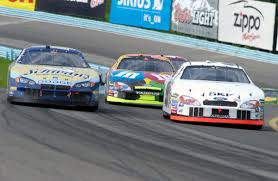
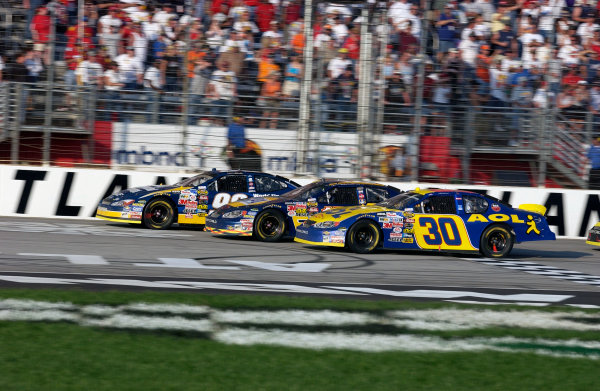
In need of a ride to finish out the season, Burton found a new home in Richard Childress Racing, climbing inside of the America Online #30 Chevrolet Monte Carlo.
Formerly driven by the unproven Johnny Sauter, the car had yet to taste true success in Winston Cup since the team’s formation in 2001, leaving drivers like Sauter, Dave Blaney, Jeff Green, and Steve Park winless.
2004-2005: A New, Humble Beginning
Childress tasked his new hire with getting the team’s bearings and setting them up for success in 2005 when he would move over to the team’s #31 car.
Truck Series driver Carl Edwards replaced Jeff in the #99, making his Nextel Cup Series debut at Michigan the next week and securing a 10th-place result. Two spots ahead of Jeff.
In fact, Edwards was the last of the five Roush cars that day, Biffle and Martin locked out the top-2 spots while Busch and Kenseth occupied the lower half of the top-10.
Not to be outdone, Burton and Childress made a hell of a statement the following week at Bristol, taking the lead from Dale Earnhardt Jr. with a little over 100 laps remaining.
Burton got the AOL running man hauling the e-mail around the world’s fastest half-mile, holding off a determined Dale Jr. for 25 laps until the #8 car zipped by for the final time.
Placing fourth had to have done wonders for that #30 team because over the next 10 weeks, they nickel-and-dimed their way from 20th to 16th in points before settling into 18th in the final rankings.
At the top of the points was a familiar face: Kurt Busch.
The hotheaded hotshoe from the Sin City cleaned up his act in 2004, winning two races in the regular season that locked him into the inaugural Chase.
Once there, Busch completed the sweep at New Hampshire and took the top spot for the championship, a spot he would not relinquish. At just 24 years old, Kurt Busch became Jack Roush’s second champion in as many years, this time being the first championship-winning owner of the new points format.
At 37 years old, Jeff Burton was starting over.
Cingular Wireless stuck with the #31 car despite their three-year relationship with former driver Robby Gordon that featured two wins in 2003.
Teamed up with Dave Blaney in a renumbered #07 car for sponsor Jack Daniel’s and Kevin Harvick, the once-dominant Chevy team meandered their way to mediocrity by the mid-2000s, experiencing their first winless season since 1997.
A winless team being matched up with a winless driver seems like a suboptimal idea, but let’s see how it worked out for Jeff and crew chief Kevin Hamlin.
Harvick heated up to start the season with three top-10s and a drought-ending victory at Bristol while Blaney and Burton occupied the midfield. It took Jeff until the eighth race at Phoenix to secure his first top-10.
The aging Virginian grabbed a second-straight top-10 on the high banks of Talladega before plunging into a four-month skid that saw the #31 crew fail to break into the top-10.
This nadir reached a head at Watkins Glen where Burton got on the gas while riding the curb on the exit of turn 1, plowing through the tire barriers and relegating him to a last-place finish — his first since he blew a tire from the lead in Atlanta all the way back in the spring of 2000.
Blaney found himself in a skid of his own dating back to his eighth-place result in Atlanta. Harvick’s excellence appeared in short bursts, keeping the team in the collective consciousness of the sport.
In a race where Harvick’s Chase chances were dashed by a beef between Dale Jarrett and Ryan Newman, Burton rose to the occasion, mounting a charge late in the going at Bristol.
He would ultimately end up a spot short of ending his ever-growing winless streak, losing out to old teammate Matt Kenseth’s familiar #17 DeWalt Ford.
The following race extinguished any hopes of a definitive turnaround when Scott Riggs’ twirling #10 car tagged Burton’s bright orange Chevy just four laps from the finish and ended their day.
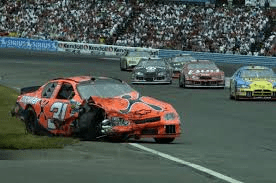
Riggs and Burton would come together again a month later at Talladega when Ryan Newman spun Casey Mears at the front of the field in the trioval.
Scott sat in the top-10, nearly in the clear until Rusty Wallace clipped his right-rear corner, shooting the Checkers Chevy driver’s side into the outside wall.
The impact popped the car into the air, a twisted heap of liquids and metals spitting and spewing on the track surface below while cars scattered to avoid being collected.
Though Jeff left Roush Racing, he maintained great relationships with his ex-teammates, and in this incident, Jeff’s tango partner would be Greg Biffle.
Biffle felt his grasp on the championship slip away as he saw Riggs’ mangled sedan helplessly tumble in the wind, but when going through something awful, it’s always nice to have a friend by your side.
A lap 71 crash at Talladega isn’t exactly a big deal for a team not in the title chase, but it became a microcosm of the 2005 season for the #31 team.
RCR limped their way out of the year, each driver snaring one last top-10 for the year in the final few races. Blaney ended his tenure in the #07 car with a sixth-place run at Homestead, ending the year 25th in points.
Harvick’s one win was a bright spot in a dim period where he earned even less top-10s than 2004 on the way to a 14th-place points ranking.

Then, there’s Jeff in 18th. Next verse, the same as the first.
Smack dab between his two teammates, Burton’s real test would be coming the next season when rookie Clint Bowyer assumed Blaney’s car. If he couldn’t outperform his more inexperienced teammate, the dark cloud hanging over Jeff Burton would only grow heavier.
All the while, Carl Edwards became a sensation with his signature celebration of doing a backflip after a win, streaking past Jimmie Johnson in Atlanta at the last possible second.
That represented his first of four wins in his de facto rookie campaign, leading to a Chase berth and a third-place rank in the final points behind Biffle in second.
Now more than ever, Jeff Burton’s back was against the wall.
His team needed more from him. His old team was doing more and better than ever without him.
Something needed to shake.
In the next part of Falling Short, Jeff Burton climbs behind the wheel at Dover Downs to take another stab at taming Miles the Monster and accidentally ends up in championship contention for the first time in six years.
(Top Photo Credit: Robt LeSieur/LAT Photography)
 pitboxpress.com