
The year was 1985 when NASCAR unveiled a new exhibition contest that was certain to mix up the Winston Cup Series field: the All-Star Race.
Darrell Waltrip seized victory in the inaugural race, a 70-lap sprint at Charlotte Motor Speedway, and since then, the NASCAR Cup Series has hosted the event at multiple circuits over the last few decades with this weekend’s race at North Wilkesboro representing the 40th edition.
Though track owner Speedway Motorsports Inc. refurbished the decrepit North Carolina facility, North Wilkesboro put on a bland racing product that pulled the life out the venue, leading to more and more conversations about the aerodynamics and horsepower of the NextGen car.
Rather than rag on NASCAR’s feeble attempts to keep this dying event format alive, I’m opting to offer solutions to NASCAR and motorsports as a whole for hosting an All-Star event.
Don’t Limit The All-Star Race To Being An In-Season Event
The biggest factor holding back the All-Star Race in NASCAR is its reliance on being held during the season.
Having the race be perpetually held before the Coke 600 wasn’t working, and the two years it was held on random weekends during the year didn’t seem to produce stronger results.
My solution: move it to the offseason!
While this does limit NASCAR’s ability to race at some of its best race tracks, this opens up limitless possibilities as to where the All-Star Race could be held globally instead.
NASCAR could pilot international races this way. Instead of throwing a track into the points-paying schedule without testing it out first, the All-Star Race could be used as a beefed-up practice session at tracks such as Suzuka, Silverstone, Zandvoort, or even the Calder Park Thunderdome in Australia.
Imagine for a moment the NASCAR Cup Series sliding around the winding corners of Interlagos or drag racing down the frontstretch at Monza before flying into Curva Grande.
It sounds amazing in my head, and just think about how awesome that would sound to NASCAR fans in markets where we don’t currently visit.
German fans filing into Hockenheimring to watch the sport’s biggest stars go wheel-to-wheel through the stadium section, cheering as Ross Chastain surges to the lead past Joey Logano.
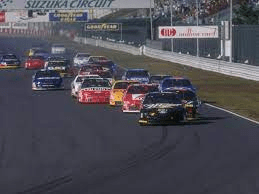
The sport achieved this very goal when they competed in exhibition races in Japan from 1996-98, running the first two years at the Suzuka West Circuit before moving over to the newly-constructed Twin Ring Motegi.
Not only that, having this race be during the offseason allows for it to act as a spotlight for the sport during its allotted downtime, putting it in front of fans who might be more preoccupied with baseball or basketball in the midst of the NASCAR season when the All-Star Race is typically held.
For those yearning for a more classic NASCAR experience on an oval, this is how ovals get built in other countries. NASCAR’s failure to go global sooner leaves the sport with so few venues to visit abroad now; if we start adding stamps to our passports, our foreign neighbors could surprise us with an oval on their home soil.
Don’t Limit The Field To NASCAR Stars
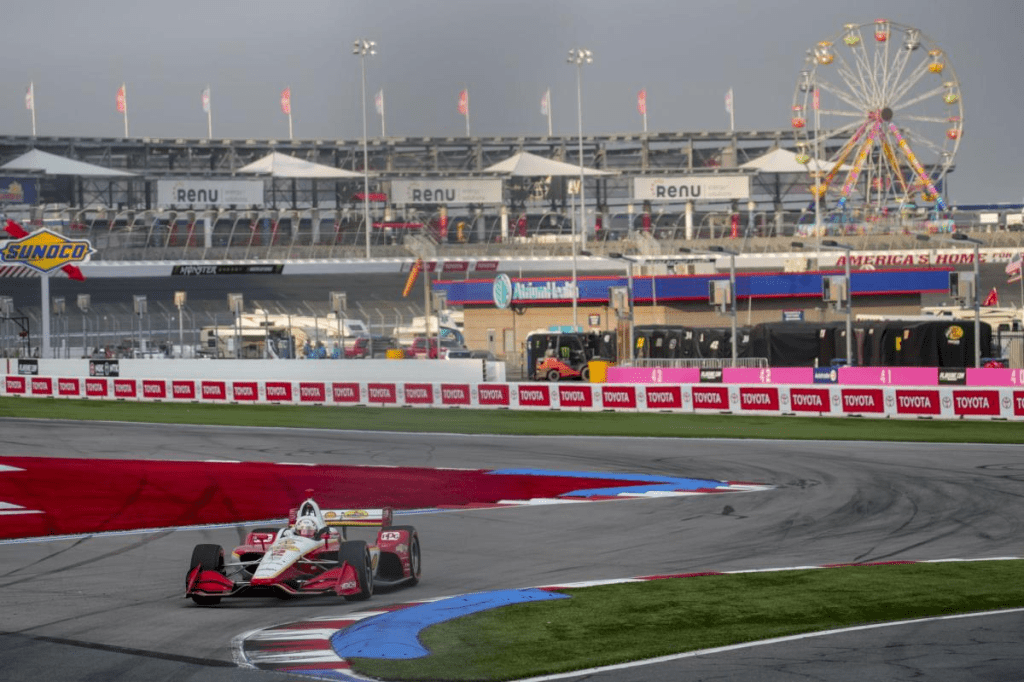
The NTT IndyCar Series tried their hand at an all-star-style event earlier this year when the Thermal Club hosted the first annual Thermal $1 Million Challenge.
Derided by fans and media members alike, the event failed to garner even modest viewership numbers and offered a subpar racing product that made viewers tune out on the experiment.
IndyCar and NASCAR have a similar issue at the moment: no transcendent stars.
If you asked 100 people on the streets of Green Bay, Wisconsin who won the Daytona 500 this year, I can guarantee you that the number would not exceed William Byron’s car number.
If I asked those same 100 people who won last year’s Indianapolis 500, it would likely be an amount I can count on my own two hands.
That’s a major problem for auto racing in America.
Thankfully, there’s a simple solution: consolidate.
By no means am I saying that the two series need to come together entirely, that is absurd and a horrific idea. What I am saying is that this could be an event that hosts drivers from multiple disciplines.
Let’s make this an All-Star Race.
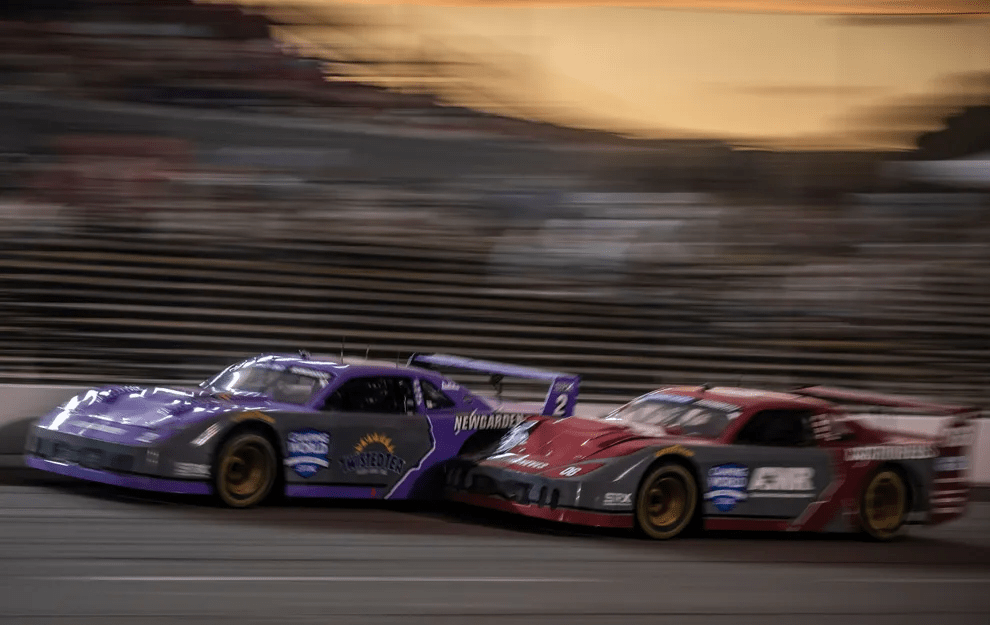
After Ross Chastain squeezes by Joey Logano at Hockenheim, Josef Newgarden sneaks past Logano and knocks Chastain out of the way to claim the lead in a NASCAR stock car.
The next day? Ryan Blaney tangles with Colton Herta after bashing tires at NordKurve in IndyCars.
A two-day event where fans get to see NASCAR and IndyCar race with a mix of stars from each series behind the wheel in a land they’ve never raced these screaming metal machines.
With both disciplines competing as spec-series, you can send these cars and their parts wherever the sanctioning bodies want to race the next week.
This kind of collaboration allows drivers to feel out what their counterparts in other series feel, providing more opportunities for drivers to crossover to other series when they have the chance.
More drivers attempting The Indy-Charlotte Double should be a desired outcome for both NASCAR and IndyCar as it draws attention to the grit, endurance, and precision of each series’ driver pool.
Obviously, the NASCAR All-Stars would need to shrink to allow for this to take shape. If NASCAR goes back to the original All-Star format of allowing just former winners from the previous season to compete, the field will be thinned out enough from that alone to offer more seats for prospective IndyCar drivers.
But, why should we stop at IndyCar? We shouldn’t!
Invite Everybody!

Invite every champion from every racing discipline on the globe to compete.
If they can’t make it, oh well, at least you tried. If they can, those are more headlines for motorsports to grab.
At the end of the day, you could have Brodie Kostecki and Johan Kristofferson duking it out at Calder Park while Denny Hamlin and Pato O’Ward fight for the lead two seconds ahead.
If you’re a racing fan, who wouldn’t want to see this?
My ultimate goal in this All-Star Race exercise is to get motorsports as an incorporated sport in the Summer Olympics that takes place in Los Angeles.
Granted, this could happen anyway, but if this hair-brained idea of mine works, you have built-in storylines to work with throughout the lead-up to the Olympics.

Scott McLaughlin and Shane Van Gisbergen collide in the All-Star Race in January at Silverstone, incensing both drivers as they head into August where they’ll tangle one-v-one to get the gold medal.
And, the cherry on top? A big cash prize!
Let’s say the event is two days: one race in NASCAR stock cars, one race in IndyCars. You offer a $2 million prize for winning each event, but if a driver masters both vehicles, they get the $4 million and an additional $1 million for a total of $5 million.
While drivers aren’t racing for points, there’s enough motivation monetarily speaking to make drivers throw caution to the wind, and the glory of being the top racer in America makes victory taste even sweeter.
If you were to get to host this event, who are a shortlist of drivers you would want to compete, and where would you take them to race?
 pitboxpress.com