
When Ray Evernham resigned as Jeff Gordon’s crew chief in the summer of 1999, many wondered what his race team would look like when it would hit the track in 2001.
Evernham and Gordon scored nearly 50 wins and three championships in their 6.5 seasons together, all of these accolades before Gordon ever reached the age of 30.
Leaving a driver of Gordon’s caliber in his prime was a puzzling decision, but many in the garage knew of Evernham’s brilliance in the shop and on top of the pit box. Though he was leaving one of the most coveted positions in the sport behind, most knew that Evernham’s venture into ownership would lead to nothing but success.
The first person Evernham tabbed to drive for the new team was 1988 NASCAR champion Bill Elliott. Many times billed “NASCAR’s Most Popular Driver”, Elliott struck out on his own in the mid-90s, running his own team with McDonald’s as sponsor.
Though Elliott was never truly out of the picture, his team slowly became an also-ran, and Elliott was looked at as a shell of his former self, not having won a race since 1994.
With the fate of his own team in total uncertainty, Elliott took a chance on Evernham, bringing back his famous #9 while helping Ray build himself and the team into contenders.
One seat filled, Evernham had his eyes on a young prospect racing for Brewco Motorsports in the Busch Series. A hotshot by the name of Casey Atwood.
Atwood grew up in Tennessee, taking an early interest in racing. After excelling in go-karts, he moved up to late models, racing at the nearby Nashville Fairgrounds where he would eventually win Rookie of the Year honors in 1996.
That same year, Atwood became the youngest participant in the NASCAR Craftsman Truck Series at the time, jumping into Chuck Spicer’s #48 STP truck for the series’ stop at the Nashville Fairgrounds.
A modest 25th-place starting spot quickly turned into disaster as the 15-year-old driver found himself out of the race, but this didn’t dissuade car owners from taking notice.
A few years rolled by, and in 1998, Atwood returned to NASCAR, this time in the Busch Series driving for Larry Lockamy. The 17-year-old finished on the lead lap in his first start at treacherous Rockingham before making his next start at the Fairgrounds.
Atwood shocked the world by sitting on pole in Lockamy’s #28 Chevy, and he sent another jolt through the garage when he led 104 laps and finished runner-up to series veteran Mike McLaughlin.
Lockamy ran Atwood for another quartet of races, never being able to recapture the magic they found in Nashville, finishing on the lead lap twice, crashing out at Bristol, and finishing three laps off the pace in New Hampshire.
Seeing immense potential in the young driver, Clarence Brewer gave Atwood a one-race deal to drive the #27 Chevy at Myrtle Beach. Though the 28th-place finish wasn’t his most impressive showing, Atwood got two more opportunities with Brewco, failing to qualify at South Boston and Richmond in the fall.
Atwood failed to qualify again at Richmond after finishing 13th at the same track in the spring, but he found himself in Hubert Hensley’s #63 Chevy for the following race at Dover where he managed to make the show for the first time since Myrtle Beach.
A 24th at Dover and a 30th at Gateway didn’t put a damper on Atwood and the team, reeling off four top-20 finishes in the season’s final six races of 1998, including winning the pole at the season finale in Homestead.
With Atwood turning 18 in August, he was able to run a full Busch schedule for Brewco in 1999, piloting the #27 Castrol GTX Chevrolet alongside teammate Kevin Grubb.

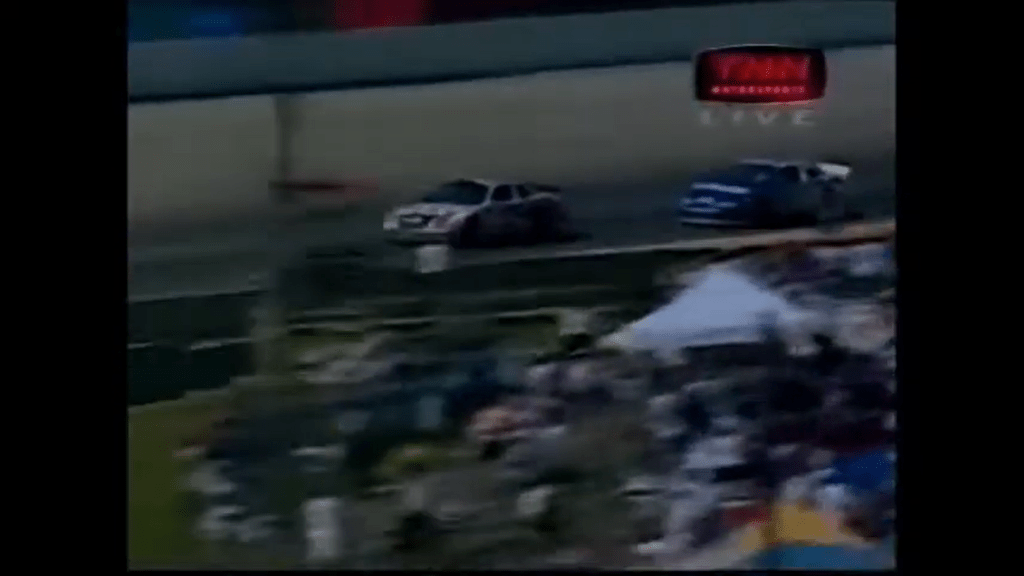
Atwood’s first race ended in calamity, barrel rolling through the Daytona infield coming to the white flag. Undeterred, Atwood returned the following week at Rockingham by claiming his first top-5 of the season, but a DNQ at Vegas and a bad string of results in the next few races left the team 18th in points after six races.
The series’ return to Nashville proved fruitful with Atwood coming home second, giving him momentum as the season reached race 12, but a terrible stretch of races led to a six-place drop over four weeks, sending the team in a spiral down to 12th in points.
Another bad run at Watkins Glen furthered the freefall, but the team managed to reverse their fortunes at the Milwaukee Mile.
Atwood laid down a blistering lap in qualifying, setting his Monte Carlo on the pole for the DieHard 250. He went on to lead the most laps and made a daring last-lap pass on Jeff Green to score his maiden victory.
A pole at Gateway and a few more good runs showed Atwood’s potential to be a viable Cup Series talent. Another win at Dover in the fall helped boost Atwood’s resume, but his results in the latter half of the season left much to be desired.
Atwood and Brewco only had two finishes better than 15th in their last eleven races, racking up an astounding four DNFs in that time. Any chance for the team to hop into the top-10 in points by season’s end were dashed, ending the year 13th.
The 27 team returned for another season, but they were in for a rude awakening. Failing to finish in the top-10 until the seventh race at Texas, Atwood sat 17th in points after the first ten races of the season.
The next ten races brought more consistent success, only finishing worse than 14th once. This brought the team up to 8th in points heading into the final weeks of the season.
As 2000 drew to a close, Atwood fared better than the previous year but still not well. He finished inside the top-20 in six of the last 12 races, with eight finishes off the lead lap.
By this point, it was clear Atwood had talent. With two career Busch wins and an 8th-place finish in the 2000 points race, these results gave Evernham the confidence to sign Atwood to drive his second car for 2001, with Evernham dubbing Atwood “the next Jeff Gordon”.
In a deal made between Evernham and Elliott, Atwood would drive a second car for Elliott’s team in select Winston Cup races in 2000 to give the burgeoning rookie a feel for the car.
Atwood debuted at Richmond, finishing two laps down in 19th after starting 35th. He followed this up by completing the race at Martinsville, slotting in 25th. His best run of the season came in his final race at Homestead.
Starting fifth, Atwood drove a mature race and ended the day in 10th, outrunning the likes of Jeff Burton, Rusty Wallace, Dale Jarrett, and Elliott.

Receiving support from United Auto Workers, Dodge Dealers, and Mountain Dew, Atwood and Evernham unveiled their #19 Dodge Intrepid for 2001 at the Daytona 500 where Atwood would complete the race a respectable 20th.
The first few weeks of the season saw many ups and downs for the team. A DNQ in Atlanta put a damper on three top-20 finishes in the first six races.
An accident with Ward Burton and Joe Nemechek squandered any hopes of a good run in Texas, and a spin the next week at Martinsville saw the team on the lower end of the running order.
Atwood lost the lead pack at Talladega, finishing a disappointing 30th as the first car one lap down. Another bad finish at Fontana sparked the team to perform well at Richmond, finishing on the lead lap for the first time since Bristol in March.
The World 600 was none too kind to the wunderkind, recording his first DNF of the season after only completing 50 laps. This started a grand tumble for the 19 team where they finished no better than 28th in the next six races, putting them a dismal 34th in the standings at the season’s halfway point.
With pressure mounting, Atwood started to turn his season around.
He led his first laps of his Winston Cup career at New Hampshire, bringing his Dodge home in 12th before grabbing another top-15 at the physical Pocono Raceway. Overheating problems took him out early at the Brickyard, but it was only a prelude for his first top-10 finish of 2001 at the rain-shortened race at Michigan.
Two bad finishes at Darlington and Richmond didn’t hinder the team’s newfound confidence, taking home a career-high 9th at the Monster Mile.
Sadly, the good fortune wouldn’t last long as a 5th-place qualifying run at Kansas was undone completely in the first turn of the first lap. Atwood was pinched down onto the apron at the entry of turn one and spun into a frenzy of 36 drivers behind him.
A small string of less-than-stellar runs at Charlotte, Martinsville, and Talladega gave way to Atwood’s best stretch of the season.
The 19 team rolled into Phoenix with a solid piece, notching their first career pole. He led the race a few times, but while leading, a rash of unexplained tire failures that plagued more than 10 other drivers struck the 19 car, resulting in an unscheduled stop. Despite a hard charge to get back on the lead lap, Atwood only managed to crawl back to 14th.
Another good qualifying run at Rockingham led to a mediocre 20th-place finish, but Homestead is where both Elliott and Atwood put Evernham Motorsports on the map.
Elliott grabbed the pole with Atwood beside him, locking out the front row. The duo would go on to lead 111 of the race’s 267 laps. A final restart put the teammates 1-2 with less than 15 laps to go, Atwood first, Elliott second.
Desperate for a win, Elliott stalked Atwood for a few laps before adjusting his line to dive beneath his young teammate, coming to four to go. Elliott drove off into the south Florida sunset, breaking a 226-race winless drought.
Atwood couldn’t hold on for an Evernham 1-2, allowing Michael Waltrip to slip through before ending the day with a new career-best 3rd-place finish.
The season’s final two races resulted in two more top-20s for the rookie, ending the season 26th in points with no wins, one pole, one top-5, and three top-10s.
For comparison, his champion teammate finished the season 15th in points with one win, five top-5s, and nine top-10s alongside two poles.
With Elliott clearly having the number one car at Evernham, Atwood’s stats are respectable for a rookie who missed a race, especially considering he finished ahead of fellow rookie Kurt Busch in points despite having less top-5s and top-10s.
Another aspect to consider in gauging Atwood’s performance is the fact that this was Dodge’s first year back in the sport with a team in its infancy. A rookie with no defined structure in a volatile environment is not a combination set up for success.
The 2001 season came to a close, and unfortunately for Atwood, an exciting free agent for Evernham and Dodge entered the market: Jeremy Mayfield.
Mayfield’s career entered a tailspin during the 2000 season. After being an early championship contender in 1998, Mayfield went through 1999 without winning but stayed consistent. 2000 brought two victories for the young gun at Fontana and Pocono, but a debilitating penalty at Talladega and an injury at Indy that caused him to miss two races ruined their season.
2001 wasn’t much better for the Kentuckian, sitting 22nd in points with eight races left. Knowing he would be out at season’s end in favor of Ryan Newman, Mayfield started talking to Evernham behind team owner Roger Penske’s back, leading to his dismissal.
With no ride, Mayfield missed the remainder of the 2001 season but was sure he’d land a ride with Evernham for 2002. With Dodge putting pressure on the new car owner, Evernham had to make a difficult choice.
Atwood would be moved to Ultra Motorsports for 2002.
Jim Smith’s team looked forward to their season with Atwood. After a year where the team ran with a carousel of drivers, Atwood brought stability and an alliance with Evernham Motorsports.
Suffice to say, the partnership was an utter failure.

In 34 races together, the best finish the 7 team could muster was 11th at Pocono, only able to crack the top-20 six times. Additionally, the team suffered five DNFs, and with only six lead-lap finishes, Smith and Evernham both decided to move on from the seemingly struggling driver.
At just the ripe age of 22, Casey Atwood was out of a ride for 2003.
One could argue that Smith never truly embraced Atwood, pairing him with three different crew chiefs in the first 11 races of the season. Though the team stuck with Tony Furr until Atwood’s release before the Phoenix race, it didn’t make much of a difference.
Back at Evernham, Mayfield didn’t perform much better in 2002. While Elliott managed to make marginal improvements with two wins and a 13th-place points finish, Mayfield suffered 7 DNFs in the first 21 races.
Mayfield managed to keep his nose clean through the rest of the season, finishing all of the final 15 races, but the team’s performance was lacking to say the least.
At the conclusion of the 2002 season, Mayfield competed in every race and finished an astonishing 26th in points, the same ranking that Atwood had the previous season.
Left with nothing, Atwood slunk back into a Busch Series seat with NFL Hall of Famer Terry Bradshaw. Taking over the #14 Navy Chevrolet midseason, the 22-year-old put the car in the top-20 in half of his 14 starts on the season, leading to a full-time ride for 2004.
On the Cup side, Evernham, Mayfield, and Elliott made 2003 their best season yet, putting both cars in the top-20 in points for the first time. Elliott was especially great in his farewell season, notching a win at Rockingham alongside 12 top-10s on his way to a 9th-place in points.
Mayfield’s season stats are much more modest. Much like the previous year, the team fumbled through the first part of the season, sitting 33rd in points with four DNFs through the first 12 races. A string of five-straight top-15s dragged them out of their slump as the team began crawling up the standings.
Much like Atwood before him, Mayfield and company got hot toward the end of the season, finishing 12th or better in 9 of the last 12 races to go from 28th in points to a respectable 19th. They even started leading laps and contending for wins.
Evernham didn’t forget about his fallen star. He kept the light on for Atwood at the shop, giving him a few races in an R&D car in 2003. At Pocono where Atwood put together his best run for Ultra the year before, his hopes at a good result were dashed when the engine let go 77 laps in.
Brutal.
Evernham gave him one last gasp at the Brickyard in the summer, the place that his old teammate Elliott scored the win the year before. He finished two laps down in 31st, ahead of Mayfield but behind Elliott who finished 5th.
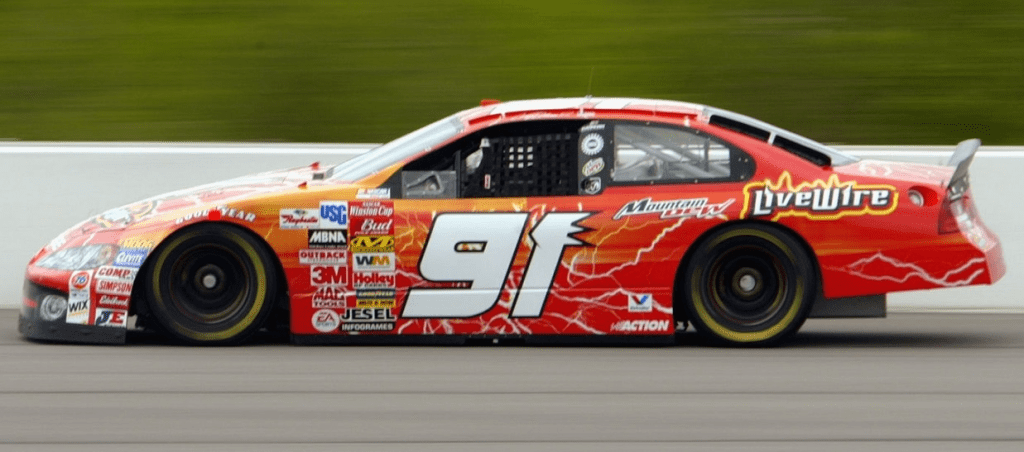
Atwood never got a ride in Cup again after that, toiling in the Busch Series until 2009. His last shot at a win was with Bradshaw in the fall Richmond race where he led 82 of the race’s 250 laps but came up just short of victory by one spot to Cup regular Robby Gordon.
That same weekend, Mayfield was able to punch his ticket to the inaugural Chase for the Cup by scoring a clutch victory in the 19 car. While Mayfield locked himself into a top-10 points finish in Cup, Atwood was released from his ride after the fall Charlotte race.
Evernham extended Atwood one last olive branch to run his Busch Series car in four races for 2005 where the Tennessean scored his final top-10 in NASCAR at Kentucky Speedway. He finished outside the top-20 in his other three starts.
2006 saw a subdued return to Brewco in the same 27 car he helped bring into the series just a few years before. He finished every race, but he never got the car higher than 17th. He led the final lap of his career at his old playground in Miami, but it looked different.
His old 27 car was bearing a blue oval on the nose, and the flat, familiar Homestead-Miami Speedway that he nearly captured his first Cup victory got reconfigured in 2003 to a high-banked intermediate. Atwood’s final lap leading the field was under caution at lap 49, waiting one more lap before ducking onto pit road for service.
A few more mediocre starts with Brewco in 2007 didn’t inspire much confidence in what was left of Casey Atwood, leading to just start-and-park opportunities with an underfunded team in 2008 and 2009. His best run with them came at Nashville Superspeedway, a 1 ⅓ mile intermediate right outside of his hometown, where he finished 22nd, one lap down.
His final salvo is commonly thought to be at the 2009 spring Phoenix race where he suffered minor injuries after a hard crash, and while his final start did come at Phoenix, it was after bowing out of the fall race with transmission trouble, four laps in.
Just like that, a 20-year-old hotshoe went from Cup rookie to out of racing in eight years.
Atwood’s failures have largely been attributed to his attitude and lack of work ethic, something he even admitted himself in a story written by ESPN’s Marty Smith in 2014.
Casey, Ray, and Dodge all had very high expectations for 2001, and the weight of those expectations crushed all three of them. By 2014, Casey was completely out of racing. Ray lost his team. Dodge had left the sport.
With 20 years of hindsight and statistics easily available to pour over, Atwood’s demise wasn’t entirely his own doing.

In Marty Smith’s story, Evernham shoulders very little blame in Atwood’s botched development in 2001 and the following years. He didn’t mention talking behind the young driver’s back to another driver about his ride. He didn’t mention how poorly the team ran in 2002 with a veteran driver, and he barely acknowledged how bad Jim Smith’s team was.
Even with a proven commodity in Jimmy Spencer in the car for 2003, the Ultra Motorsports #7 Dodge could only manage four top-10s alongside eight DNFs. That team was never fit to be a viable option, especially for a 21-year-old in his second season.
To throw it further back, Evernham and Gordon moved up to Cup with Hendrick Motorsports in 1993. Their rookie season had its share of trials and tribulations, failing to finish 11 of 30 races. They scored 11 top-10s on the season as well, giving them room to grow into 1994 where Gordon and Evernham became contenders.
Those 11 DNFs are mistakes that an established team like Hendrick Motorsports are able to chew when it comes to investing in a young driver’s future. Evernham Motorsports and Dodge simply didn’t offer Atwood any wiggle room. He needed to perform out of the gate.
Jeff Gordon finished fewer races in a shorter schedule in an even less-talented field. He finished a lower percentage of laps than Atwood by a significant margin, yet Atwood got kicked to the curb at season’s end right after matching promise with results.
The next year, he’s shipped off to a team that proved before and after his tenure that they weren’t capable of competing on a consistent basis in favor of a veteran that could hardly match Atwood’s results in the same equipment while also racking up an additional DNF.
While I do think that Atwood’s refusal to live in North Carolina certainly played a role in his downfall, it certainly wasn’t the only aspect that got in the way of improvement.
Atwood lamented that he could have been more diligent about exercise, making sure he had the stamina for the Winston Cup Series, which you could see affected him at tracks like Martinsville. I believe this is why Evernham put Atwood in for the fall Martinsville race in 2000; he wanted Casey to know that he needed to work harder at his durability.
With that said, this is the same guy who completed 999/1000 laps at Bristol as a rookie, which is supremely impressive. Though Bristol also had a reputation for being difficult on the drivers physically, the challenges Bristol and Martinsville present are much different.
Atwood’s improvement towards the end of 2001 signaled a potential change in attitude for 2002 where the young driver could have been galvanized by the end-of-season momentum.
Instead, Atwood was dumped to a worse team with less resources. How this was supposed to make the Cup Series easier on Atwood is beyond me.
Marty Smith and Atwood both suggested that his career could’ve looked different if Evernham had just released him after the 2001 season as there were seats available on the market, but after 2002 with Ultra, the well dried up.
Casey Atwood may have had the talent to be “the next Jeff Gordon”, but he didn’t have the team resources, stability, or support that would allow him to actualize his potential.
Featured photo from PepsiCo, Evernham Motorsports.
 pitboxpress.com